
Elicit AI Review
Research & EducationFreemiumIt is the AI research assistant for finding, summarizing, and extracting data from over 138 million academic papers.
What Is Elicit AI?
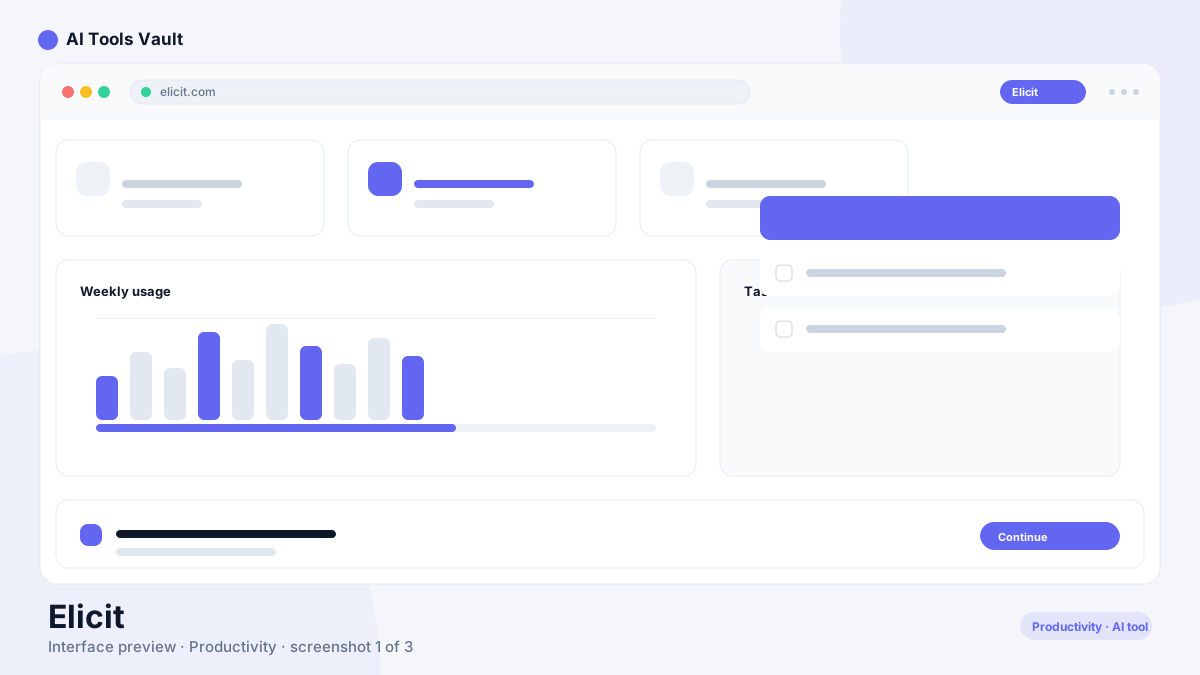
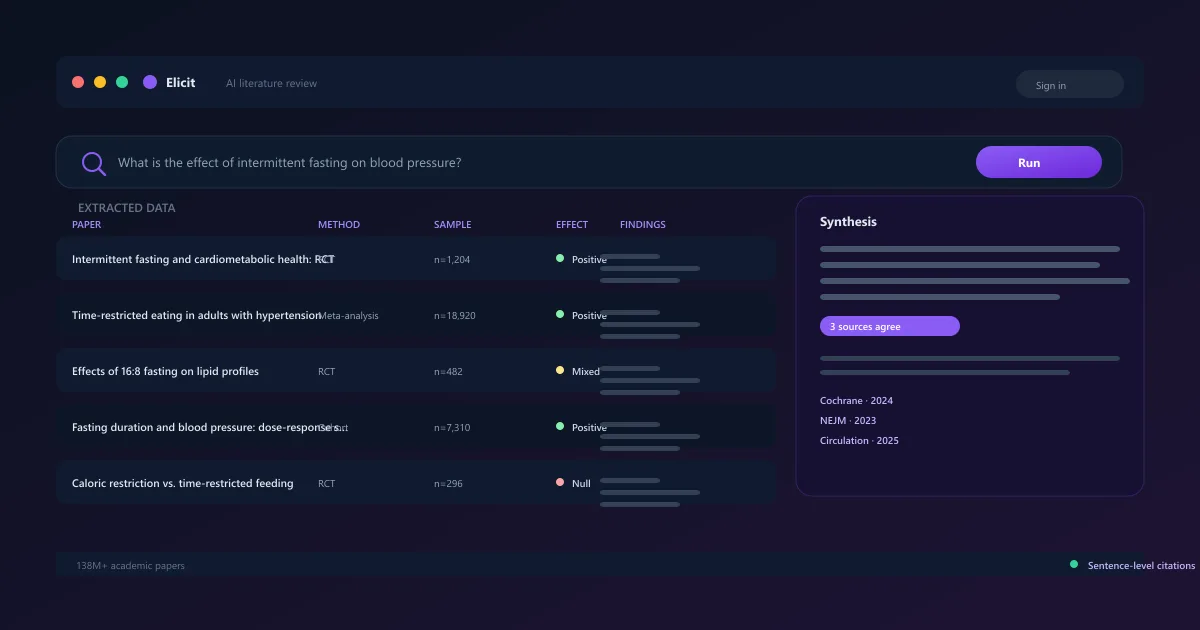
Elicit AI is an AI research assistant built for scientific literature. Type a research question and it searches over 138 million academic papers and clinical trials, screens the most relevant results, and produces a structured report with every claim cited at sentence level.
It runs on a 'factored cognition' approach: search, screening, extraction, and reporting work as separate, validated steps rather than one opaque model. That makes outputs traceable and auditable — essential for high-stakes academic and industry research.
Since 2018 the platform has been used by over 2 million researchers in academia and industry. It now also offers an API and MCP server so its pipeline can power agents and custom research workflows.
The core promise is simple: turn days of manual literature work into minutes of assisted review, without sacrificing the citations reviewers need to verify every claim.
The free tier is enough to test the workflow on a small review, and the monthly credit pool refreshes automatically. Most researchers start there before deciding whether the paid tiers are worth it for their workload.
Elicit AI Literature Review Tool
The literature review workflow automates the slow parts of reviewing research. You start with a question, and the platform searches, screens, and organizes relevant papers into a working list you can iterate on.
Screening is assisted too: mark papers as included or excluded, filter by study type, year, and quality signals, and export the whole review. The systematic review mode aligns with PRISMA 2020 and keeps every stage reproducible.
For teams, reviews can be shared and handed between members, with roles that keep screening consistent. Version history preserves what changed at each stage, which reviewers appreciate during audits.
- Search across 138M+ papers and clinical trials
- Assisted abstract and full-text screening
- Systematic review workflow with PRISMA 2020 support
- Exportable, auditable review stages
Elicit AI Extract Data from PDF
Extraction is where the tool shines. Give it a batch of papers and it reads each PDF and pulls structured fields — population, intervention, sample size, outcomes, and effect estimates — into a table you can filter and sort.
Because extraction is a separate validated step, the output stays consistent across hundreds of papers. You can review, correct, and re-run extractions, which keeps errors visible instead of hiding them in a black box.
The extraction tables export to CSV and reference managers, so findings can move straight into analysis software. Accuracy improves when you provide clear instructions for each column, and corrections teach the schema over time.
- Pull structured data from uploaded PDFs
- Population, sample size, outcomes & effects
- Consistent extraction across hundreds of papers
- Review and correct any extracted value
Elicit AI Synthesize Papers
Synthesis takes the extracted data one step further: the tool writes an AI summary that compares findings across the included papers, highlights where studies agree and diverge, and supports every statement with citations.
The result reads like a research summary, not a chatbot ramble — organized by theme or question, with a limitations section you can expand and edit. It's a strong starting draft for a methods section or review manuscript.
Summaries default to plain language so stakeholders outside the lab can follow the evidence. That broadens who can act on the research, from clinicians to policy teams, without losing the citation trail.
- Cited synthesis across your included papers
- Theme-based summaries with diverging findings
- Editable limitations section
- Draft-ready for manuscripts
Elicit AI Custom Columns
Custom columns let you define the exact data you want extracted. Instead of default fields, create columns like 'Blinding', 'Primary outcome', or 'Funding source' and the tool extracts them for every paper in your review.
Columns persist across sessions, so a team can standardize an extraction schema once and reuse it on every new batch of papers. That turns scattered reading notes into a consistent, queryable dataset.
Because schemas live with your workspace, onboarding new collaborators is fast — they inherit the exact fields your team agreed on. It also reduces the chance of inconsistent data when different people review different papers.
- Define your own extraction schema
- Reusable columns across reviews and teams
- Filter and export column data
- Consistent dataset from mixed sources
Elicit AI Pricing — Free Credits & Subscription
The platform runs on a credit model: a monthly pool powers searches, summaries, and extractions. The free tier gives a starter pool every month, enough to evaluate the workflow on a small review.
Plus from around $12/month raises the pool and unlocks full extraction and longer reports. Pro and Team plans add the API, systematic review workflows, and admin controls, with pricing quoted per team. Heavy review periods may need a higher plan.
Credits renew monthly on every plan, and unused Pro credits can roll over on annual billing. For teams, per-seat plans pool usage centrally, which is convenient when several researchers share a literature review project.
Compare Plans & Pricing
Free tier; Plus & Pro plans from ~$12/mo; API and Teams plans available
Free
For students and occasional researchers.
- Search academic papers
- AI summaries with citations
- Basic data extraction
- Monthly usage pool
Plus
For active researchers.
- Higher monthly usage pool
- Full data extraction
- Longer research reports
- Priority processing
Pro & Team
For labs, teams, and API usage.
- Full API access
- Systematic review workflows
- Team workspaces
- Admin controls
Elicit vs Consensus AI
Consensus AI answers scientific questions fast with an agreement Meter and cited summaries, ideal for a quick evidence read. It is optimized for breadth — checking what the science says in seconds.
This platform goes deeper into the review workflow: structured data extraction, custom columns, and systematic screening. If you need a defensible extraction table across hundreds of papers, the platform is the stronger option; for a fast clinical answer, Consensus wins.
Both tools give you a generous free tier to compare on your own questions. The deciding factor is usually the workflow: quick answers versus a structured extraction pipeline you can defend.
Elicit vs Scite.ai
Scite.ai is best known for its Smart Citations and citation statements — it shows how papers cite each other and whether citations are supporting, mentioning, or contrasting. That makes it a strong tool for citation analysis and reference checks.
This platform is built around extraction and synthesis rather than citation graphs. If your work is about how literature interacts, Scite adds real value; if you need structured data from papers, the extraction-first approach here is more direct. Many reviewers end up using both.
For a hands-on comparison, run the same set of papers through both platforms and inspect the outputs. Citation statements are Scite's edge, while reproducible extraction tables are the strength here.
Elicit vs Perplexity
Perplexity is a general AI search engine for fast, cited answers from the live web. It covers news, code, and everyday knowledge with a generous free tier.
The platform is a specialist for academic evidence: it searches a curated scholarly corpus, screens papers systematically, and extracts structured data for reviews. For a quick answer, Perplexity is faster; for a defensible literature review, the research-first approach here is in a league of its own.
The free tiers of both make the test easy: search the same research question and compare how each handles citations and structured output. Most heavy researchers keep both, using Perplexity for breadth and this platform for depth.
Pros and Cons
With the basics covered, here is how Elicit performs once you push past the demo.
Weight the trade-offs by how much structured extraction you need — heavy review work justifies a paid plan, while light users can stay on the free tier.
Before upgrading, run a real question through the free tier and check whether the extraction quality and credit ceiling match your volume. That keeps the decision based on your actual workflow rather than a feature list.
Pros
- Finds relevant papers from 138M+ academic sources
- Every claim backed by sentence-level citations
- Automates literature reviews and data extraction
- API and MCP for research automation
Cons
- Best results on scientific rather than general queries
- Advanced features sit behind Pro plans
- Extraction accuracy still needs human review
- Steeper learning curve than general chatbots
Best For
Recommended use cases and scenarios where Elicit shines.
Frequently Asked Questions
Common questions about Elicit, answered.
What is Elicit AI?
It's an AI research assistant that searches over 138 million academic papers and clinical trials, screens the most relevant results, and produces cited research reports with structured data extraction.
Is Elicit AI free?
Yes, with limits. The free tier includes a monthly credit pool for searching, summarizing, and basic extraction. Plus plans from around $12/month raise the pool and unlock full features.
Does Elicit AI extract data from PDFs?
Yes. You can upload papers and the tool reads each PDF to extract structured fields like population, sample size, outcomes, and effect estimates into filterable tables.
Is Elicit AI good for systematic reviews?
Yes. The systematic review workflow automates search, screening, data extraction, and reporting in line with PRISMA 2020, and exports each stage so the review stays reproducible and auditable.
How does Elicit AI pricing work?
It's credit-based. Free gives a monthly usage pool; Plus from around $12/month adds full extraction and longer reports; Pro and Team plans add the API and admin controls with custom pricing.
Reviews & Ratings
Loading reviews...
Explore More AI Productivity Tools
Browse the full AI Tools Vault directory to compare Elicit with every AI research and productivity tool, or line up your shortlist side by side.
Similar Tools
More Research & Education tools you might like

Socratic by Google
Google's AI homework helper app that uses your camera to read problems and explains answers across math, science, history, and more — 100% free.

Caktus AI
AI study platform for students with 25+ purpose-built tools - essay writer with citations, step-by-step math solver, humanizer, and research assistant.

Guides & Articles about Elicit
Read our detailed reviews and comparisons covering Elicit
 Guides & How-To
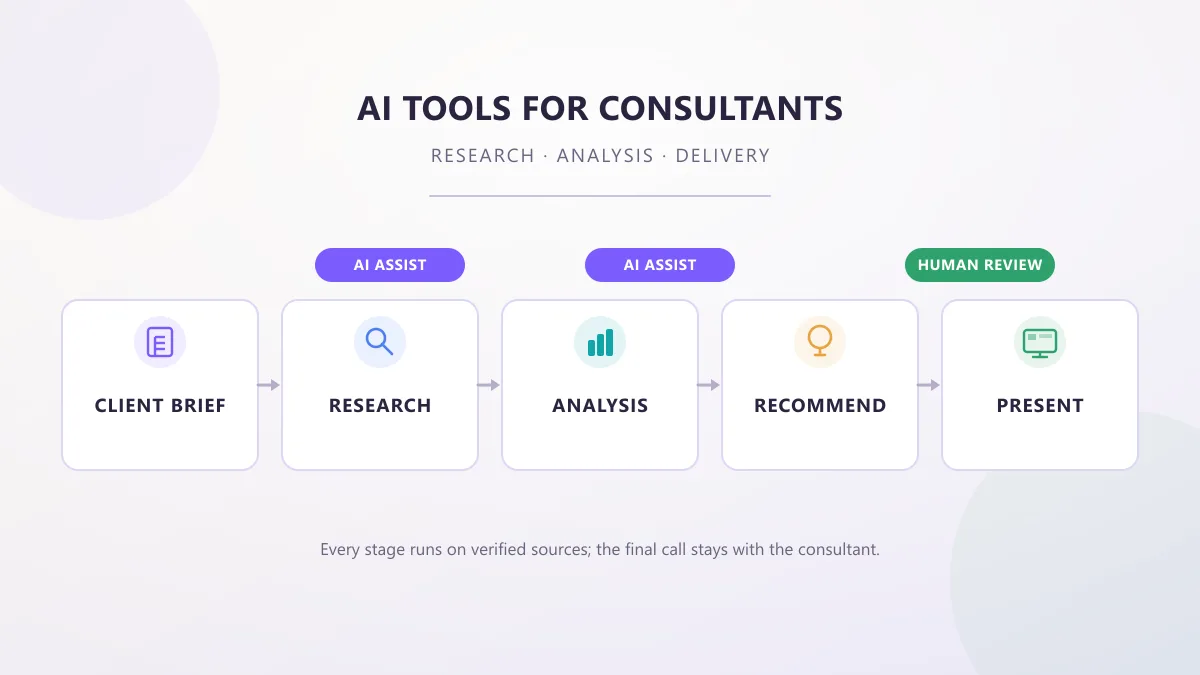
AI Tools for Consultants: Research, Analysis & Delivery
AI tools for consultants in 2026, organized by the work a consultant actually does — research, analysis, proposals, meetings, and decks — with practical prompts, workflows, and client-data checks.
 AI Tools Vault Team
 Guides & How-To
Best AI Tools for Students and Researchers in 2026
Six practical AI tools for students and researchers in 2026 — literature review, paper reading, study help, and writing polish, with verified pricing and honest first-hand notes.
Jawad Fiaz Guides & How-To
AI Tools for Students: Which Tool Works for Which Task
Ten AI tools for students matched to real study tasks — research, notes, writing and math — with free tiers, limits and honest drawbacks.
Jawad Fiaz