Best AI Tools for Students and Researchers in 2026
Six practical AI tools for students and researchers in 2026 — literature review, paper reading, study help, and writing polish, with verified pricing and honest first-hand notes.

Six practical AI tools for students and researchers in 2026 — literature review, paper reading, study help, and writing polish, with verified pricing and honest first-hand notes.
Searching for papers stopped being the bottleneck a while ago. The real work of study and research is still reading, comparing, verifying, and writing — and that is where the tools in this guide earn their place. Every price and free-plan limit below was checked against the official product pages in September 2026, and the first-hand notes come from my own short-term use, not from vendor claims.
This guide covers six AI tools for students and researchers across the academic pipeline: Consensus and Elicit for finding and comparing literature, Explainpaper and NotebookLM for understanding papers, and Claude and Grammarly for writing. I also walk through two practical workflows and the limits no tool warns you about.
Each of these tools solves one specific problem, and the biggest mistake is expecting a single one to do everything:
Only capabilities the products actually document are included here, and "free" always means what the official plan pages say, not what marketing implies.
Consensus is an AI search engine for peer-reviewed research. It searches a corpus of more than 200 million papers — its help center currently puts the figure at 220M+ — and answers a question with a short synthesis where every claim links back to the studies behind it. You can filter results by study type, such as meta-analysis or randomized trial, and the Consensus Meter shows how much of the literature supports a yes-or-no question.
That grounding is the point. A synthesized answer with visible sources is much easier to trust than a chatbot answer with none, because it gives you somewhere concrete to check. On the free plan you get unlimited paper searches, ten Pro messages a month, and three deep reviews (plan details). Pro costs $20/month or $144/year — effectively $12/month — and adds unlimited Pro messages, 15 deep reviews, and more. Consensus can also export papers from a search or a saved list as CSV or RIS files, which import cleanly into Zotero, EndNote, or Mendeley (export guide).
Elicit is built for the systematic side of a review. You give it a research question, it finds relevant papers, and it extracts findings into a table you can filter and sort, with dedicated screening and data-extraction workflows for larger projects. It imports from Zotero and accepts uploaded RIS, BIB, and PDF files from other tools.
The old credit system is gone. The free Basic tier (pricing page) now includes unlimited search across more than 138 million papers, unlimited summaries, and full-text chat, with limited Research Agent and Report usage. Pro is $49 per user/month billed annually ($588/year) and adds the systematic-review workflow, bigger extraction capacity, custom extractions, and API access. Reports export as PDF or Word, tables as CSV or Excel, and references as RIS or BIB (export guide).
Explainpaper is the simplest tool here: upload a PDF, highlight a passage that does not make sense, and it explains that passage in plainer language, with follow-up questions. The free tier (pricing page) covers unlimited highlight explanations and follow-up questions with basic models, which is genuinely enough for lighter reading. Pro is $16/month with a seven-day trial and adds an advanced model, explanations of math formulas and figures, full-paper summaries, and saved highlights.
NotebookLM — renamed Gemini Notebook in 2026 but still widely known by its old name — is a source-grounded workspace. You upload sources such as PDFs and notes, then ask questions; Google's documentation says it answers from the sources you selected and will not respond from material outside them (FAQ). Beyond chat, it generates study guides, flashcards, quizzes, mind maps, and audio or video overviews from your sources.
The free plan gives you 100 notebooks, up to 50 sources each, and 50 chats a day. Each source is capped at 500,000 words or 200 MB, whichever comes first. Paid access is bundled into Google's AI subscriptions: Plus at $4.99/month roughly doubles the limits (plan limits). Grounding in your own documents makes this a strong companion for a defined syllabus, but it can still misread a passage, so check anything important against the source.
Claude is a general writing assistant that suits research writing mainly because of its large context window — up to a million tokens depending on the model — so a long chapter or literature summary can stay in one conversation (pricing page). It is most useful at the messy stage of a project: organizing rough notes into an outline, drafting section by section, or explaining a concept you need to write about correctly. Claude has a usable free tier; Pro is $17/month billed annually or $20 month-to-month, and Max plans start at $100/month for heavier use. Anthropic also lists model training as opt-out for consumer plans.
Grammarly quietly renamed its plans in 2026 — the old Premium tier is now Pro. Its job is still final polish: catching grammar and spelling, flagging unclear or awkward phrasing, and suggesting rewrites (plan details). The free tier covers basic corrections and tone plus 100 AI prompts a month. Pro, which adds plagiarism detection and AI-text detection, costs $12/month billed annually ($144/year) or $30 month-to-month. It is a finishing tool, not a writing substitute.
These are honest impressions from my own short-term use, not a benchmark, and your mileage will differ.
To be clear about the limits of this: I did not run controlled accuracy tests, work through hundreds of papers, or measure time saved. Read the points above as notes from limited first-hand use, and verify anything you rely on.
Pick by the task, not by reputation:
The overlaps are real: Consensus and Elicit both search literature, and Explainpaper and NotebookLM both work with PDFs. Choose based on whether you need a single cited answer or a comparison table, and a passage-level explanation or a full source-set workspace.
Say you have a 25-page lecture PDF and an exam in three weeks:
The point is that the tool produces material for you to study, not material you memorize blindly. Whenever a summary feels thin, go back to the source.
A filtering-scale version of the same idea:
What do you verify by hand? Every citation, every key number, and anything that ends up in your final manuscript. These tools shorten the steps; they do not replace them.
Citations are where AI tools quietly fail. Tools that ground answers in sources — Consensus, Elicit, NotebookLM — reduce the risk of invented references because they work from real material, but none of them is infallible, and all of them can misquote or mis-summarize a source. Google's own NotebookLM help page notes that you do not always get a citation when it references a very short source. So open the original paper, check reference details yourself, and never let a tool generate a reference list without your verification.
The same logic applies to graded or published work. Follow your institution's AI policy, disclose AI use when your journal or field requires it, and keep the writing and the final decisions yours. AI output is study material and drafts, not authorship.
If you upload drafts, unpublished data, or anything sensitive, check what each product actually says about your data. A few things are confirmed on official pages:
Beyond that, follow your institution's or employer's rules about what may leave their systems. When in doubt, treat anything you upload as potentially reviewable, and keep unpublished results out of free tiers whose data terms you have not read.
Which AI tools are best for literature review and research papers? Consensus returns cited answers grounded in peer-reviewed papers, and Elicit builds filterable tables of study findings. Together they cover the finding, screening, and comparison parts of a review, and both have workable free tiers.
Can these AI tools write my paper for me? They can help you draft, structure, and polish, but the writing and the final decisions should stay yours. Use them to understand sources and outline arguments, verify every claim against the original paper, and follow your institution's AI policy.
Are these tools free for students? Each has a free tier. Consensus includes unlimited paper searches, Elicit's free Basic plan has unlimited search, Explainpaper covers unlimited highlight explanations, NotebookLM's free plan allows 100 notebooks with 50 sources each, and both Claude and Grammarly have free versions. Paid plans add usage for heavier work.
How accurate are AI-generated citations? They can be wrong. Tools that ground answers in sources reduce the risk, but you still need to open each cited paper and check the reference details yourself before submitting anything.
Which tools work with uploaded research papers? Explainpaper explains passages in PDFs you upload, and NotebookLM answers questions from sources you upload, up to 50 per notebook on the free plan. Elicit lets you import from Zotero and upload RIS, BIB, or PDF files.
Is it ethical to use AI tools for studying and research? Used as assistants, yes. Follow your institution's rules, disclose AI use when required, verify every source, and never let AI fabricate data or references.
| Tool | Best use | Free plan (Sept 2026) | Paid pricing (Sept 2026) | Big limitation | Review |
|---|---|---|---|---|---|
| Consensus | Cited literature search and synthesis | Unlimited paper searches, 10 Pro messages, 3 deep reviews/month | Pro $20/mo or $144/yr ($12/mo) | Free tier caps AI messages and deep reviews | Review |
| Elicit | Systematic review tables and screening | Unlimited search across 138M+ papers | Pro $49/user/mo billed annually | Screening and export capacity limited on free tier | Review |
| Explainpaper | Explaining difficult PDF passages | Unlimited highlight explanations (basic models) | Pro $16/mo, 7-day trial | Plain-language explanations need checking | Review |
| NotebookLM | Source-grounded study and summaries | 100 notebooks, 50 sources each, 50 chats/day | Plus via Google AI Plus $4.99/mo | Free caps easily hit; can misread sources | Review |
| Claude | Outlining, drafting, explaining | Free tier | Pro $17/mo annual or $20/mo monthly | Verify everything it writes for academic use | Review |
| Grammarly | Final grammar and clarity polish | Free tier, 100 AI prompts/month | Pro $12/mo annual or $30/mo monthly | Polish only, no research or drafting | Review |
No single AI tool for students and researchers covers every step of a project, and none of them replaces judgment. A practical 2026 setup: Consensus or Elicit for the literature, NotebookLM — with Explainpaper for the hard passages — for reading, Claude for the outline and first draft, and Grammarly for the final pass. Start on the free tiers, and pay only when a limit actually blocks you.
Browse the full AI tools directory or line tools up in the compare tool before you commit. For a broader student-only list, see our separate guide to AI tools for students.
Get our best AI tool reviews and guides delivered to your inbox each week. No spam, unsubscribe anytime.

Written by
The AI Tools Vault editorial team researches, tests, and reviews the best AI tools across every category.
More reading on guides & how-to
 Guides & How-To
Six free AI photo enhancers, six different deals. What each free tier really allows, what AI cannot recover, and how to check a result before trusting it.
 Jawad Fiaz
 Guides & How-To
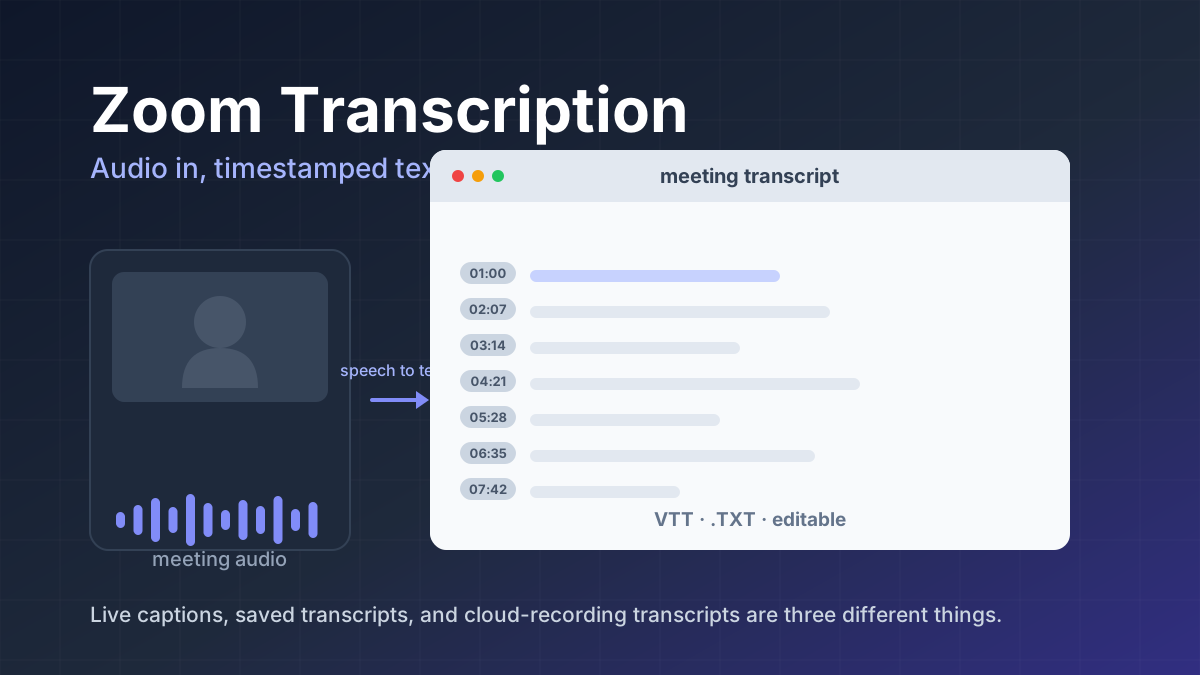
Zoom transcription turns meeting audio into text. Learn the difference between transcripts, captions, and AI summaries, how to enable them, and when to use third-party tools.
Jawad Fiaz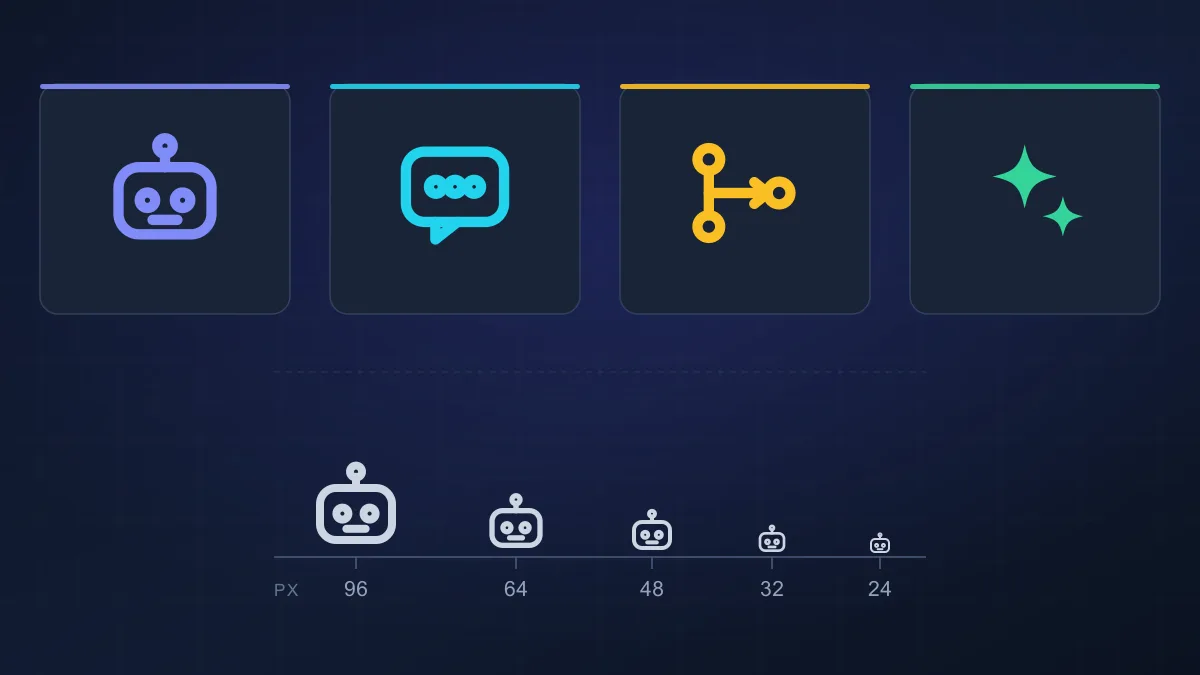 Guides & How-To
An AI agent icon can name an agent, mark an AI feature, show live status, or point at a tool. Here is what the common symbols mean, where to find one, and what to check before you ship it.
AI Tools Vault Team