Free AI Image Generators: Limits, Rights & Results
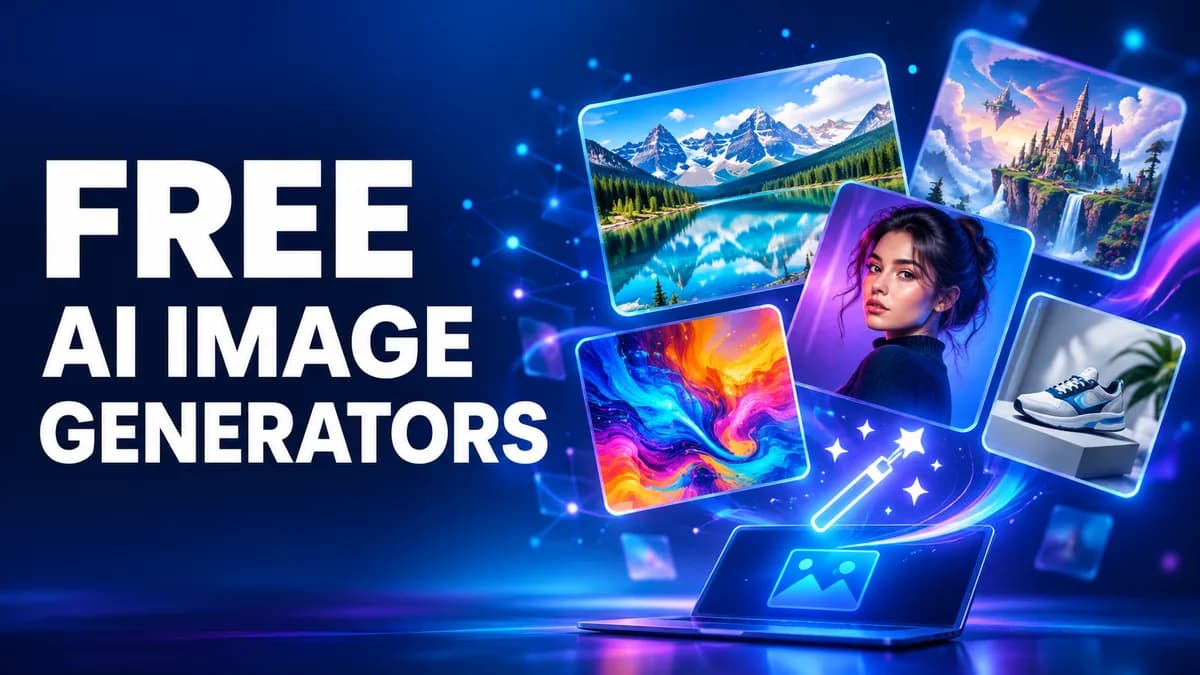
What free AI image generators actually allow in 2026 — the real daily limits, visible watermarks versus invisible provenance, and whether you can use the output commercially.
What free AI image generators actually allow in 2026 — the real daily limits, visible watermarks versus invisible provenance, and whether you can use the output commercially.
"Free" on an AI image generator's landing page rarely means the same thing as "free" in its plan details. One tool hands you 30 generations a week, another gives you unlimited low-resolution images with a logo in the corner, and a third counts an upscale as a separate charge. Pick by the headline and you meet the catch after you have built a routine around it.
This guide covers the free tiers that are genuinely usable in late 2026, and it separates the three questions that decide whether one is worth your time: how much you can make, whether the file is marked, and what you may do with the result.
How this was checked. Free-plan details were verified against each provider's own documentation, help centre, pricing or terms pages on 13 October 2026. On that date I generated the Pollinations sample below through its free image endpoint, and this page uses a real ChatGPT Images generation from the same day. I did not open paid accounts for the other tools, so their numbers are documented rather than personally tested — and where a provider publishes no number, I say so instead of guessing.
OpenAI retired the official DALL·E GPT on 30 August 2026; the DALL·E 2 and 3 API models went earlier, on 12 May 2026. The current product is ChatGPT Images 2.5, available on every ChatGPT tier including free, with plan-based limits. OpenAI does not publish a fixed free image count, so third-party figures such as "3 a week" or "2–3 a day" are unreliable. Outputs carry C2PA metadata and an invisible watermark — provenance rather than a visible logo. API access uses the GPT‑Image‑2.5 Flare and Sunburst models.
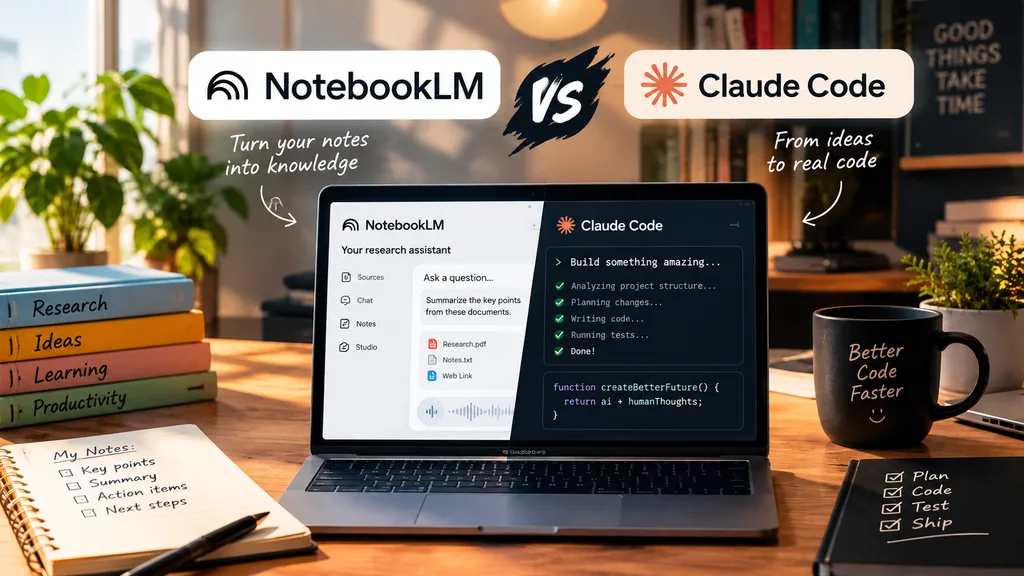
A real ChatGPT Images generation from 13 October 2026, shown as a result sample rather than a benchmark.
Google retired ImageFX and Whisk on 30 April 2026, folding image generation into Google Flow (flow.google.com), which generates images free using the Nano Banana model. Google's outputs use SynthID, the invisible watermark from Google DeepMind that is designed to survive cropping, filters and lossy compression, and that Gemini, Search and Chrome can detect. There is no visible stamp; what remains is a signal that the image is AI-generated. Google keeps its free limits on the Flow and Gemini plan pages, so check them where you generate.
Bing Image Creator now runs on Microsoft's MAI-Image-2.5-Flash models, not DALL·E. Microsoft's help page grants 15 free "fast" creations per day, replenished daily, and allows up to 200 prompts per 24 hours — each "Edit image" click counts. A Microsoft account is required, and generated images are stored for up to 90 days. The visible watermark is opt-in, not automatic. Commercial use is neither clearly granted nor clearly forbidden in the terms, so treat "free for business" as unresolved.
Firefly's free plan gives a limited number of daily generations across Adobe's generative features on a curated set of models, refreshing each day — Adobe does not publish the exact number. Free credits are allocated on first use and expire one month later. Adobe states that non-beta Firefly outputs may be used commercially and that it does not train on your personal or generated content, which is the reason to choose it over a generic free tool despite the smaller allowance.
Canva's free plan gives up to 20 uses of its Standard or Premium AI tools per month, not per tool, resetting at 00:00 UTC on the first of the month. (The "200 uses" figure quoted online belongs to paid plans.) Canva's AI Product Terms say you may use your output "for any lawful purpose", at your own risk, and that usage limits are operational controls rather than fixed entitlements. When Canva routes a request to a third-party model, that model's licence can still sit underneath Canva's terms.
Ideogram is still the strongest free option for words inside images, but its free tier is narrower than most lists admit: 30 credits per week, granted only through Google, Apple or Microsoft sign-in — email-and-password accounts receive none. Free generations are public by default, so treat the prompt and the image as visible. There is no topping up; you wait for the weekly reset. (docs.ideogram.ai)
Leonardo AI's free plan grants 150 tokens every 24 hours, and tokens are spent per job. A default 768×768 image costs one token; upscaling, larger sizes and some models cost more, so "150" means many quick drafts or a handful of finished ones. Unused tokens do not carry over. (Leonardo help centre)
FLUX.1 is Black Forest Labs' model family, not a website, and its two main open weights carry opposite licences: FLUX.1 [schnell] is Apache 2.0 (commercial use permitted) while FLUX.1 [dev] is non-commercial. On top of the model licence, every free host adds its own limit, watermark and terms. Self-hosting removes the host's rules but not the model licence — running [dev] locally is still non-commercial. "FLUX is free for commercial use" is true only if you name the variant.
Stability AI's Core Models, including Stable Diffusion 3.5 (still its newest image model — there is no "Stable Diffusion 4"), are free to use unless you are a commercial user generating over US$1M in annual revenue. Self-hosting is governed by the Community License; hosted access runs through the Stability AI Developer Platform. As with FLUX, the licence follows the model, not the tool you happen to use.
Pollinations is the only option here built for programmatic use. Its legacy Classic endpoint needs no signup, but the free tier is deliberately slow: one image at least 45 seconds apart per IP, returning HTTP 402 when you exceed it, with a 768×768 maximum and a small Pollinations logo on the image. Prompts appear in a public feed unless you opt out. Pollinations' current documentation says all requests now require an API key, so treat keyless access as legacy and unstable; its terms also warn that model licences vary and commercial use must be verified.
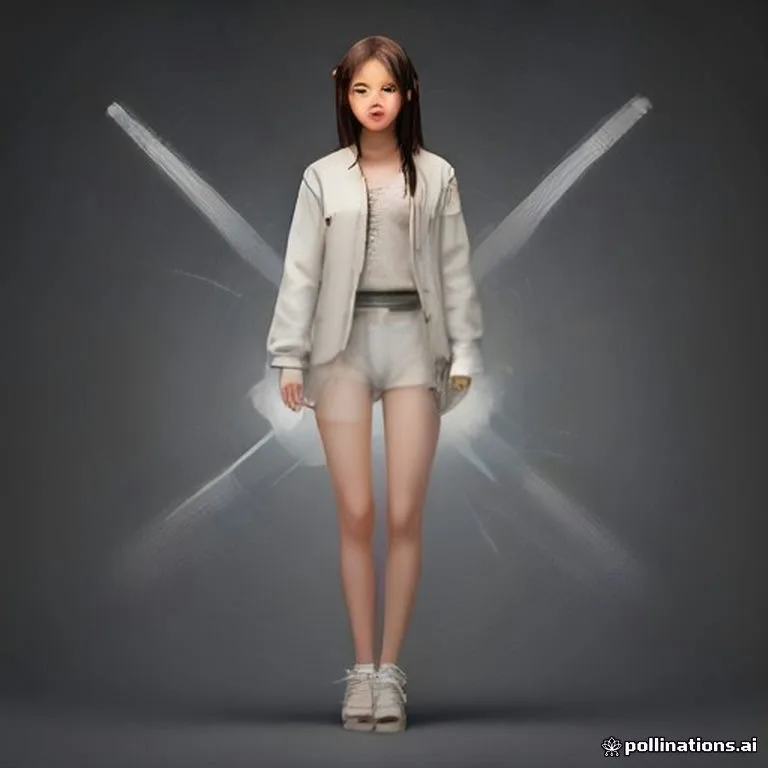
A 768×768 image generated through Pollinations' free endpoint on 13 October 2026, from a poster prompt for a fictional cafe named "North Star Coffee".
Craiyon descends from DALL·E mini and still does the simplest thing: free, no account, a grid of images per prompt. The free tier is watermarked, with private images, HD downloads and no watermark reserved for paid plans. Commercial use is allowed on any plan but free users must credit Craiyon — its terms accept a logo placed in the corner where there is no text to carry the credit. Craiyon's terms also grant it a broad licence over prompts and generated images.
NightCafe Studio's free tier is two things at once: 5 credits each day you log in or open the app, 3 more for entering and voting in the daily challenge, and unlimited base Stable Diffusion generations that spend no credits. Credits do not expire, and NightCafe permits commercial use provided you did not use copyrighted images. There is no forced watermark — the "artist overlay" is optional. Its help centre does not describe how free prompts are stored, so read the community standards before posting sensitive work.
Deep Dream Generator has run since 2015 and still lets you generate without signing up, on an energy allowance that recharges hourly rather than resetting daily: a new free account stores up to 20 energy and regains roughly one per hour. Costs vary sharply by model — a classic style can cost a few energy, while newer models cost far more. It states outputs are watermark-free and that you keep commercial rights, but its FAQ conditions commercial use on a paid subscription or energy pack while its Terms grant broad rights to sell what you create. Flag the contradiction and check before a paid job.
A visible watermark is a logo or text burned into the pixels — the free Pollinations logo, Craiyon's mark. It is easy to see, easy to crop, and removing it usually breaches the service's terms.
An invisible watermark such as SynthID is a signal embedded in the data itself. You cannot see it and should not try to strip it; its purpose is to keep the image identifiable as AI-generated, even after editing.
C2PA is provenance metadata attached to the file, as OpenAI does with ChatGPT Images. It records what made the image, and it can be lost when a file is re-encoded, resized or screenshotted.
None of the three decides what you may do with the image. But they decide whether the image can be recognised as synthetic, which increasingly matters when a client, a marketplace or a platform asks.
Two separate documents govern a generated image.
The service's terms say whether you may use the output commercially and who owns it. Craiyon's free images are watermarked and need credit; Deep Dream Generator's pages disagree with each other; Ideogram's free images are public. These terms apply even when the model underneath is open.
The model licence says whether the model may be used commercially at all. This is where FLUX.1 [schnell] (Apache 2.0) and FLUX.1 [dev] (non-commercial) diverge, and where Stability AI's US$1M revenue line sits.
Get both right before a paid job. A permissive model under a restrictive host is still restrictive, and an open licence does not cancel a site's watermark or public-feed rule.
| Tool | Free allowance | Marking | Commercial use | Best for |
|---|---|---|---|---|
| ChatGPT Images | Limits by plan; no published free count | C2PA metadata + invisible watermark | Check current terms | Image making inside ChatGPT |
| Google Flow | Free generations; limits vary | SynthID invisible watermark | Check Google's terms | Free images on Nano Banana |
| Bing Image Creator | 15 fast creations/day; up to 200 prompts/24h | Visible watermark is opt-in | Not clearly stated | Fast free volume |
| Adobe Firefly | Limited daily generations; count unpublished | Content Credentials | Stated for non-beta features | Rights-cautious commercial work |
| Canva Free | Up to 20 AI uses/month, shared | Not specified | Lawful use, at your own risk | Design and generation together |
| Ideogram | 30 credits/week; social sign-in only | Free images are public | Check terms | Text and logos in images |
| Leonardo AI | 150 tokens/day | Depends on model | Check terms | Characters and game art |
| FLUX.1 (self-hosted) | Unlimited; hardware is the cost | None | schnell yes; dev no | Open weights, local control |
| Stable Diffusion | Free under US$1M revenue | Varies by host | Community License terms | Local, private generation |
| Pollinations | Free API; ~1 image/45s per IP | Small logo on free images | Model licences vary | Prototypes, scripts, free API |
| Craiyon | Free, no account | Watermarked | Yes, with credit to Craiyon | No-signup brainstorming |
| NightCafe Studio | 5 credits/day (+3 challenge); unlimited base SD | No forced watermark | Yes, if no copyrighted input | Art styles and community |
| Deep Dream Generator | Energy, recharge model | Watermark-free | Pages contradict each other | Artistic and surreal styles |
Note: Free limits change often and vary by region. Every figure above reflects provider documentation checked on 13 October 2026 — verify before you commit a workflow.
Are free AI image generators really free? Yes, with a ration each. The tools above are usable for free, but each limits something different: credits per week, tokens per day, fast creations per day, a shared monthly AI allowance, or a rate limit per IP address. None is unlimited in the everyday sense.
Which free AI image generator has no watermark? It depends what you mean. Craiyon and the free Pollinations endpoint add a visible mark; Bing's visible watermark is opt-in; NightCafe and Deep Dream Generator say their free images are not force-watermarked. But none is unmarked in the wider sense — Google embeds SynthID, and ChatGPT Images attaches C2PA metadata plus an invisible watermark. No visible logo does not mean no provenance.
Can I use free AI images commercially? Sometimes, and the terms matter more than the model. Adobe permits commercial use of non-beta Firefly output; Craiyon allows it if free users credit the service; Deep Dream Generator's own pages disagree; and with open models the variant decides, since FLUX.1 [schnell] is commercial-friendly while [dev] is not. This is general information, not legal advice.
What happened to ImageFX and DALL·E? Both were retired. Google folded ImageFX and Whisk into Google Flow on 30 April 2026, running on Nano Banana. OpenAI retired the DALL·E GPT on 30 August 2026 and removed the DALL·E 2 and 3 API models on 12 May 2026. The current product is ChatGPT Images 2.5, with plan-based limits on every tier.
Do free AI image generators keep my images private? Often not by default. Ideogram's free generations are public and Pollinations publishes prompts to a public feed unless you opt out; Bing stores images for up to 90 days; Craiyon's privacy policy is silent on prompts; Adobe says it does not train on your content. Check the privacy page before feeding in anything sensitive.
Is there a free AI image generator API? Pollinations is the practical free choice in code. Its legacy Classic endpoint has answered without a key — JPEGs up to 768×768, a small logo, and roughly one image per 45 seconds per IP address — but its current documentation says requests now require an API key, so treat keyless access as legacy.
There is no single best free AI image generator, because the free tiers are not competing on the same axis. Adobe Firefly is the safest on rights, Ideogram is the best on text but makes free images public, Google Flow gives the most polished free output while embedding SynthID, and Pollinations is the only genuinely scriptable free option. Decide which of the three questions — limit, marking, rights — matters most for your project, then pick the tool that scores best there. When a free generation still needs cleaning up, Pixlr covers background removal, fill and upscaling in the browser. Browse the full AI tools directory for more options, or pit these side by side with the compare tool.
Get our best AI tool reviews and guides delivered to your inbox each week. No spam, unsubscribe anytime.
Written by
Jawad Fiaz writes about AI tools and how to evaluate them, drawing on hands-on use, official product documentation, published pricing, and independent research rather than vendor marketing.
More reading on guides & how-to
 Guides & How-To
The free AI background removal tools still worth using after remove.bg closes in December 2026 — Photoroom, Adobe Firefly, Canva, Clipdrop and rembg, with free-tier limits checked in October 2026.
 Jawad Fiaz
 Guides & How-To
Six free AI photo enhancers, six different deals. What each free tier really allows, what AI cannot recover, and how to check a result before trusting it.
Jawad Fiaz Guides & How-To
Zoom transcription turns meeting audio into text. Learn the difference between transcripts, captions, and AI summaries, how to enable them, and when to use third-party tools.
Jawad Fiaz