Every launch week, the Product Hunt feed fills with chatbots, image generators, and new wrappers around the same frontier model. These 5 new AI tools, picked from the September 10, 2026 discovery feed, work differently: each attacks a distinct problem — the data a CRM ignores, the cost of cloud round-trips, the mess agents leave in production, the gap between a camera and an answer, and a support ticket that actually gets closed.
This roundup of 5 new AI tools is research-based, and each of these 5 new AI tools was checked against official sites, documentation, pricing pages, and security pages on September 10, 2026. Anything still early is flagged rather than padded.
The pattern under the current launch noise — and the reason these 5 new AI tools rose above it — is easy to miss. The 5 new AI tools worth attention are leaving the chat window and moving into systems: records that update themselves, models that run on a phone, dashboards that trace an agent's decisions, cameras that answer in plain language, and support systems that resolve instead of escalate. Almost every mainstream story this week — giant personal agents, frontier model launches — points back at the same consumer chat experience. These five point somewhere else.
These 5 new AI tools share one instinct: meet AI where the work already happens. If you flip through most new AI tools lists in 2026, they still point at chat. The useful test for 5 new AI tools worth your time is whether they slot into a real workflow, not whether they can write a clever reply — and each tool below earns its place by that test.
1. Lightfield
What it does
Lightfield is the CRM entry on this 5 new AI tools list, and the easiest to misread: it is not a chatbot bolted onto a contact database. The company calls the product agent-native, and it means that as an engineering stance, not a label. Lightfield captures the stream of customer conversations — email, calendar, calls, meeting recordings — keeps them in a working context graph, and lets AI agents act on that context directly.
The shift is small to describe, large to feel. A traditional CRM is a database you feed by hand; Lightfield updates itself. Agents refresh records, draft follow-ups, prep meeting briefs, and surface deal advice cited back to the exact moment in a call. It connects Gmail, Outlook, Slack, and LinkedIn, auto-joins Zoom, Meet, and Teams meetings, and can backfill up to two years of contact history — chunks of the stack that HubSpot AI and Apollo.io sell as separate products.
Why it is interesting
The interesting part is what the CRM sees. Instead of relying on what a rep types into fields, Lightfield builds a living model of each customer from what people actually say in email, calls, and meetings, then hands that context to agents that do the follow-up work. The company also ships a natural-language agent builder and, on higher tiers, an agent SDK — so the automation surface is a product feature, not an afterthought, and the reason it is the 5 new AI tools pick that changes most about a rep's daily work.
Who it is for
Sales teams drowning in data entry, follow-up volume, and meeting notes. If the pain is records that never get updated and deals that stall for lack of follow-through, this 5 new AI tools pick is worth a look before you renew a smart-CRM contract.
What to watch out for
It is new, and the pricing model has two moving parts. Plans run $89 per user per month for Starter (up to three seats), $999 per workspace per month for Pro, and $1,999 for Growth, with Enterprise handling SSO and role-based access at custom pricing, plus a 14-day trial on Starter. Agentic work — workflows, automations, sequences — draws from workspace credits that the vendor meters per use, so the bill tracks how much work you hand the agents, not just seat count. Lightfield publishes SOC 2 Type II and GDPR documentation and states it will not train on customer data without permission; ISO 27001 is listed as roadmap. Momentum is real but recent: a $47M Series A led by a16z on September 9, 2026, and 5,000+ companies since November 2025. Full detail: our Lightfield review; broader context: AI agents for business.
2. Desert Ant Labs
The models
Desert Ant Labs is the deliberately small end of the 5 new AI tools spectrum. Instead of sending every task to a frontier cloud model, this European lab ships small, specialized models that run on-device inside your product. Its September 8, 2026 launch brought 18 models — 12 stable, 6 in beta — behind one SDK for Swift, Kotlin, and JavaScript, running through Core ML on Apple devices, LiteRT on Android, and WebAssembly in the browser and Node, with models on Hugging Face and a CLI on GitHub.
Some jobs care more about specialization, latency, and repeated on-device runs than raw generality. Clear, at about 9MB, pulls a noisy five-minute recording to studio quality in about a second. Redact strips PII across 27 languages in a 12MB model, Gist tags content topics across 101 languages, and Tongue spots 84 languages from three words in a 2MB package. Voz transcribes ten minutes of audio in about two seconds on an iPhone. That is a different compute posture than paying per token for everything.
Why it is interesting
Pricing is the headline, and it is unusual: free up to 100,000 monthly active devices per SDK, no tokens, no logins, no per-run limit below the cap, with unpublished pricing above it. Privacy is the second headline: the lab states data never leaves the device, and "what was never uploaded can never be compelled" is a real argument — but a claim to evaluate, not a guarantee. We found no independent telemetry audit. Founder Paul Veugen previously built Detail, a 2025 Apple App Store Award winner, so the mobile pedigree is genuine.
Who it is for
Mobile and product developers who need audio, text, or vision capabilities behind a hard privacy or latency requirement. Finished cloud alternatives — ElevenLabs, Descript, Adobe Podcast, and meeting noise cleanup via Krisp — solve similar problems the productized way. For a developer it is also the cheapest of these 5 new AI tools to trial, because it is free until an app passes 100,000 active devices.
What to watch out for
The honest tradeoff is in the name: of the 5 new AI tools here, this is the rawest — you get the model layer, and the integration, tuning, and quality work are yours. The catalog is also young, and the generous free tier is exactly what a lab building adoption would offer. Our Desert Ant Labs review covers the full catalog.
3. AI Observability by OpenObserve
What it does
Most lists of emerging AI tools ignore what happens after you ship an agent. When a system makes hundreds of tool calls per request, "the model responded" stops being a useful health signal. AI Observability by OpenObserve answers the harder question: what were the agent, tools, model, latency, cost, and quality actually doing?
A naming note first. OpenObserve is a broader observability platform — logs, metrics, traces, frontend monitoring — and AI and LLM monitoring is the observability pick among the 5 new AI tools here. It launched on Product Hunt on September 10, 2026 as "AI Observability by OpenObserve" and is best read as the AI layer of an existing platform, not a separate product.
Why it is interesting
It is OpenTelemetry-native, which makes it the 5 new AI tools pick with the deepest instrumentation story. Standard gen_ai spans and OpenInference conventions just route in, so instrumentation you already have — LangChain, CrewAI, LlamaIndex, OpenAI, Anthropic, LiteLLM, plus gateways and no-code builders, 80+ integrations — keeps working. The Agent Graph maps each agent to the models, tools, services, and datastores it calls, with request counts and error health on every edge, so a runaway loop or a failing tool is obvious at a glance. Session views break cost, duration, and tokens down per turn, then link to the full trace. Quality is scored in production: online evaluations grade live spans, traces, or sessions as they arrive, using your own provider as judge or a remote scorer, with built-in scorers for relevance, hallucination, toxicity, and bias.
Who it is for
AI infrastructure, platform, and SRE teams running agents in production. The OpenObserve documentation frames the fit plainly: an LLM span and the Postgres span beneath it share a trace ID, so "model problem or infra problem?" is one query instead of one investigation.
The catch
It is early operational tooling — you own instrumentation and thresholds, and it targets infrastructure teams, not an office install. Pricing is per GB ingested and queried, not per span or per seat, which stays predictable when agents fan out into hundreds of spans per request. Users are unlimited, and deployment spans managed cloud, self-hosted single binary, BYOC, and BYOB, with a free self-hosted tier to 50GB. Of the 5 new AI tools here it is the only one built on an open source core with 21.7k GitHub stars, and SOC 2 Type II and ISO 27001 listed. Context in AI agent frameworks compared and AI agent security.
4. Viso Now
What it does
Computer vision used to be a project: datasets, labeling, model selection, training, deployment. Viso Now, the computer-vision slot in this batch of 5 new AI tools, makes it a conversation instead. You type what should be watched in plain language, or drop in a clip, and the platform assembles the workflow — input feed, detection logic, alerts — and runs it in front of you.
The bet is a single pre-trained model with general visual reasoning, which viso.ai calls its Visual General Intelligence engine, plus an agent layer that turns your description into a working vision app. You stay in control afterward: rules, thresholds, and outputs can be tuned before you publish to live feeds.
Why it is interesting
It sits between the cameras you already run and the tools your team uses. Sources include IP and CCTV cameras over RTSP and ONVIF, NVR systems, uploaded files, and cloud folder sync from AWS, Azure, or GCP; outputs push to Slack, Microsoft Teams, email, or any system over the API. Templates cover loading dock exclusion zones, PPE checks, restricted-area vehicle alerts, and wait-time tracking, so teams start from a proven base instead of a blank canvas. It is also the easiest of the 5 new AI tools here to judge for free, on free daily credits, before spending anything.
Who it is for
Operations, quality, safety, and integrator teams that need a working vision answer in hours, not a research project; for them, Viso Now is the 5 new AI tools entry that collapses a project timeline into days. If the ask is "tell my team when a truck sits in the loading lane" rather than "train a custom detector," this is the category to evaluate.
What to watch out for
On accuracy we are deliberate: viso.ai publishes no public benchmark figures for its vision engine, so we will not invent any. The workflow promise — no datasets, no labeling, no model selection — is what the product actually sells, and what you buy is the platform and its policies, not a guaranteed detection rate — the honest framing for this 5 new AI tools pick. Pricing is credit-based and shared across unlimited users: free with 5 daily credits (up to 30 per month), Pro $25/month for 100 credits, Business $50/month adding SSO/SAML and role-based access, Enterprise quoted (details on the Viso Now pricing page). SOC 2, ISO 27001, GDPR, and AI Act compliance sit in the Suite security docs. See also AI tools for small business 2026 and best AI tools of 2026.
5. Typewise Nova
What it does
Typewise Nova is the customer-support entry on this 5 new AI tools list, and the naming needs a second look. Typewise started in 2019 as a keyboard app, closed that product in 2022, joined Y Combinator, and moved to business software. Today it is solely an AI customer experience platform, and Nova is its AI operator on top.
The core idea is that support is an operational system, not a chatbot in front of an FAQ — the 5 new AI tools bet here that quietly changes how support orgs budget. Typewise agents resolve requests end to end — look up the order, apply the policy, close the ticket — while a supervisor routes each request to the right specialist, brings in a person when judgment is needed, and picks the ticket back up.
The unusual bet
Nova is the fresh piece, front and center during the launch week of September 10–20, 2026. You set it up by talking to the system: explain the desired behavior in plain language, and Nova tests and publishes the result — a billing specialist that reads Stripe, a returns-policy update, a new WhatsApp channel — in about 15 minutes with no developer. It also watches operations, flagging a CSAT slip or a refund spike after a product change and offering to draft a reply macro.
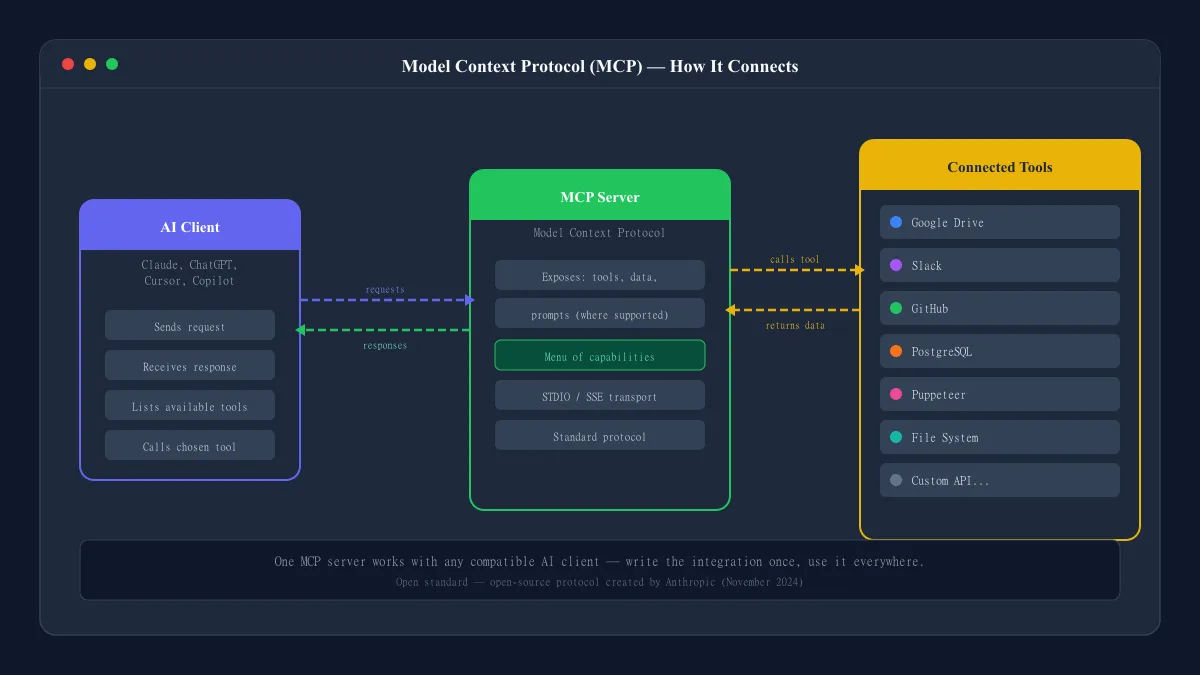
Resolution is the metric here, not deflection. A partial hand-off counts half, and an unresolved ticket is free. And coverage is the depth play: of the 5 new AI tools on this page, Typewise connects to the widest ecosystem — chat, email, WhatsApp, social, voice, and in-app, in any language, over 3,500+ connectors the company describes as MCP-native (our MCP server explainer covers that term).
Who it is for
Customer support and operations teams that want the agent to finish the job rather than bounce the customer to a person. If you are tired of paying for deflection, per-resolution pricing is the signal that the vendor bets on completion — the clearest outcome bet among these 5 new AI tools.
What to watch out for
Vendor figures like a 90% autonomous resolution rate and 10M+ tickets resolved come from case studies, so read them as marketing evidence, not independent evaluation. Pricing is a base plan plus a per-resolution rate that drops with volume: Starter $99/month, Growth $599, Business $2,000/month billed annually, Enterprise custom (all on the Typewise pricing page). Resolutions run $2 pay-as-you-go down to about $1 with volume packages; a full resolution counts 1.0, a partial hand-off 0.5; the trial includes 100 resolution credits and $10 in AI Operator credits without a card. Security claims are substantial — ISO 27001 certified, GDPR, EU AI Act alignment, EU data residency — and worth confirming for your needs. Related reading: AI tools for small business 2026 and our HubSpot AI review.
Five different industries, five different lanes — the point of grouping them is the direction they confirm, not the competition between them. The comparison below is factual, not a ranking.
| Tool |
Core role |
What it changes |
Who owns the work |
| Lightfield |
Sales engagement |
Record-keeping and follow-up |
Reps and sales ops |
| Desert Ant Labs |
On-device inference |
Where compute runs |
Mobile and product developers |
| AI Observability by OpenObserve |
Agent production visibility |
How teams debug AI systems |
SRE and platform teams |
| Viso Now |
Agentic computer vision |
How vision workflows get built |
Operations and safety teams |
| Typewise Nova |
Customer operations |
How tickets get resolved |
Support and CX teams |
None of these 5 new AI tools competes with another for the same buyer, which is why the reader match in the next section matters more than "which is best." All five also share a quiet pricing theme that separates this crop from last year's wrappers: none charges per chat message — they meter per credit, per GB, per resolution, per seat, or free per device.
Who Should Pay Attention?
- Sales teams should watch Lightfield when the pain is data entry and follow-up volume. Credit-metered agent work means the bill grows with usage, so pilot this 5 new AI tools pick on your real workload first and compare against a mainstream smart CRM.
- Mobile and product developers should watch Desert Ant Labs when a feature needs on-device privacy, latency, or cost. Free below 100,000 monthly active devices per SDK is cheap enough to test this month.
- AI infrastructure and platform teams running agents in production should watch AI Observability by OpenObserve. The day you cannot answer "what did the agent actually do" — with tool calls, cost, and quality attached — this class of tool stops being optional.
- Operations, quality, safety, and computer-vision builders should watch Viso Now. The path from description to working vision app is real, and free daily credits are enough to judge it.
- Customer support and operations teams should watch Typewise Nova if paid-by-outcome automation is the goal — and verify the resolution-rate claims against your own tickets before scaling.
Two cautions apply to all 5 new AI tools here. They are young: four are launch-week or launch-month products from September 2026, so APIs and pricing may move fast. And the strongest claims — accuracy, resolution rates, certifications — come from vendors; we verified what we could against documentation and flagged what we could not.
Frequently Asked Questions
Short answers to the questions people ask most often about these 5 new AI tools, with pricing current as of September 10, 2026.
What are the 5 new AI tools featured in this article?
The 5 new AI tools featured are Lightfield, Desert Ant Labs, AI Observability by OpenObserve, Viso Now, and Typewise Nova. They were picked from the September 10, 2026 launch and discovery feeds because each solves a different operational problem instead of adding another chatbot or image generator to the pile.
Is Lightfield an AI CRM?
Yes. Lightfield is an agent-native CRM that captures emails, calls, and meetings, keeps a customer context graph, and uses AI agents to update records, draft follow-ups, and prepare for meetings. Pricing starts at $89 per user per month on Starter, with agent work metered through workspace credits.
What is different about Desert Ant Labs?
Desert Ant Labs builds small, specialized models that run on-device through one SDK for Swift, Kotlin, and JavaScript. The lab launched 18 models in September 2026 and offers them free up to 100,000 monthly active devices per SDK.
Why does AI observability matter for AI agents?
Once agents start making tool calls and generating operational traffic, teams need to see what the agent, its tools, models, latency, cost, and quality were actually doing. AI Observability by OpenObserve provides this with OpenTelemetry-native tracing and online evaluations on live traffic.
What is Viso Now used for?
Viso Now is an agentic computer vision platform. You describe what should be watched in plain language and the platform assembles the vision workflow, connects cameras, and pushes alerts to Slack, Teams, email, or any system over its API. It has a free plan and paid plans from $25 per month.
What is Typewise Nova?
Typewise Nova is an AI operator inside Typewise's customer experience platform. You describe how your support should work in plain language and Nova builds, tests, and publishes the specialists and workflows, with plans from $99 per month plus per-resolution pricing.