AI Meeting Summary: Turn Long Meetings Into Clear Notes
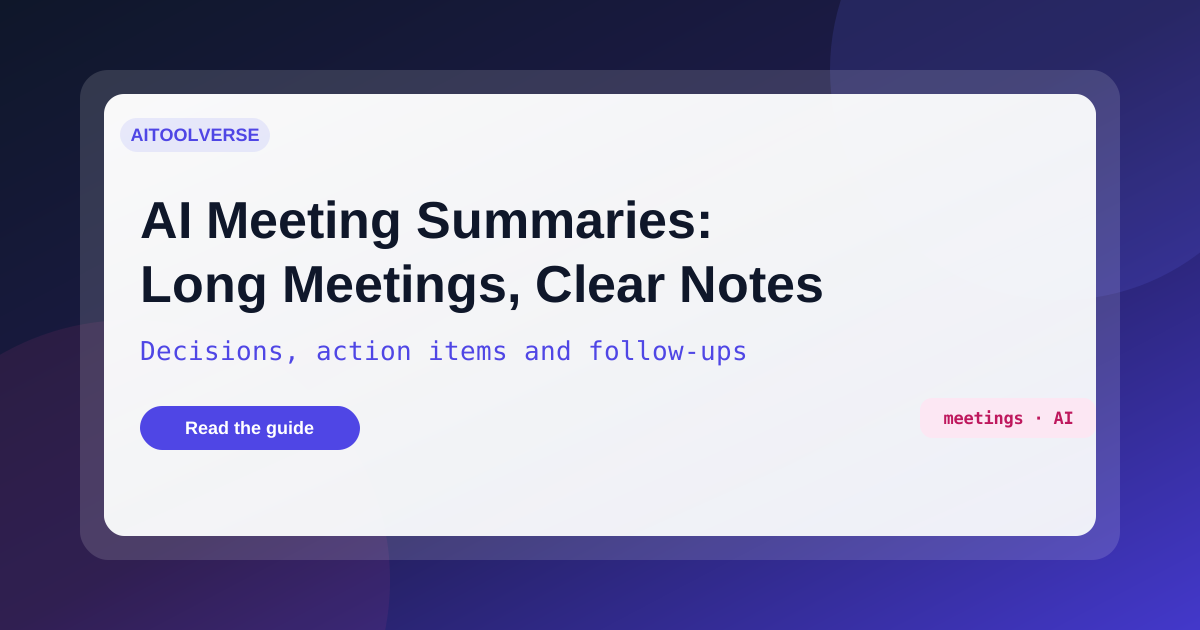
An AI meeting summary turns a long conversation into clear notes with decisions, action items, and follow-ups. How the tools work and what to look for.
An AI meeting summary turns a long conversation into clear notes with decisions, action items, and follow-ups. How the tools work and what to look for.
A one-hour meeting produces an hour of talk, a handful of half-remembered decisions, and usually no written trace of either. An AI meeting summary fixes that by turning the conversation into clear notes: the main points, the decisions made, and the tasks people walked away with.
This guide explains how these summaries actually work, what a good one should contain, how Zoom's built-in option compares with dedicated assistants such as Otter, Fathom, Granola, and Read, and what to check before trusting any of them with your meetings.
An AI meeting summary is a condensed, structured version of a meeting produced automatically from its recording, transcript, or live audio.
Instead of replaying an hour of conversation, you read a short document that surfaces what actually matters. Depending on the platform, a good summary captures:
The exact output varies between platforms. Dedicated meeting assistants such as Fireflies AI and Otter AI join your calls, transcribe them live, and produce these summaries without extra effort.
The main benefit is simple: you save time.
A one-hour meeting contains far more detail than anyone needs to remember word for word. A well-made summary gives you a quick way to understand what happened without reviewing the entire conversation.
It also helps people who missed the meeting. Instead of asking a colleague to explain everything twice, they read the summary and catch up on the important parts in a few minutes.
Most tools follow the same three-step process.
First, the conversation is captured — through a recording, a transcript, or direct integration with a platform like Zoom, Google Meet, or Microsoft Teams.
Next, speech recognition converts the audio into text, and language models analyze that transcript: separating topics, discarding small talk, spotting decisions and commitments, and linking tasks to the people who agreed to own them.
Finally, the system generates a structured summary you can review, edit, and share. That last step matters more than it sounds — treating the output as a first draft rather than a final record is what separates careful teams from careless ones.
There are several practical ways teams use these tools day to day.
Instead of typing everything manually, you participate fully in the conversation and review the generated AI meeting notes afterward.
Meetings often end with tasks nobody wrote down. A summary makes those responsibilities explicit, which is usually the difference between a decision and a wish.
A short summary travels easily through email, Slack, or Notion — a full transcript rarely gets read.
If you were unavailable, a summary gives you the context without forcing you to watch the whole recording at double speed.
For projects involving multiple people, keeping a running record of decisions prevents the classic "wait, what did we agree on?" confusion weeks later.
Traditional note-taking still has real advantages. A person understands context, notices hesitation, and knows which remark actually mattered. AI processes the same conversation faster but misses those signals.
That is why many teams combine both: the AI creates the first draft, and a human reviews, corrects, and approves it — essential practice for legal, financial, or client-facing meetings.
It also helps to distinguish two related documents:
Most AI tools generate excellent meeting notes and serviceable drafts of minutes — but formal minutes usually need a human editor before they count as official.
The fastest way to get a summary is the platform you already use.
Zoom's AI Companion can automatically summarize a meeting after it ends, list next steps, and even answer questions asked during the call ("catch me up on the last ten minutes"). It comes included with paid Zoom plans rather than as a separate subscription, though an account administrator may need to enable it first.
Google Meet and Microsoft Teams have followed the same path, adding Gemini- and Copilot-powered recaps to their premium tiers respectively.
Built-in summarization wins on convenience: nothing to install, no extra participant, no new workflow. Its limits show up elsewhere — summaries stay locked inside that platform's ecosystem, customization is minimal, and if your meetings span multiple tools, no single built-in feature follows you across all of them. That gap is exactly where dedicated assistants compete.
These four take visibly different approaches, so the right choice depends less on features-list comparisons and more on how your meetings actually happen.
Otter AI is the established name in this category. A visible bot joins your Zoom, Meet, or Teams call, transcribes in real time, and produces shareable notes with speaker identification. Its broad integration support makes it a safe default for general meeting capture, and a free tier lets you test the workflow with monthly minute limits.
Fathom also sends a bot into video calls, but stands out for its unusually generous free plan — unlimited recording and transcription, with AI summaries on your first few calls each month. Paid tiers add conversational search across past meetings and CRM syncing aimed at sales teams.
Granola works differently. It runs as a desktop notepad on Mac and Windows, capturing your computer's audio locally — no bot ever appears in the participant list. You jot quick shorthand during the meeting, and afterward it merges your notes with the transcript into a polished document that reads like your own writing. Because nothing visible joins the call, it suits sensitive client conversations, investor updates, and even in-person meetings.
Read AI goes furthest toward analytics. Its assistant joins supported meetings and returns a report covering the summary, transcript, key questions, and action items — plus participation metrics and coaching insights across your whole meeting history. Teams that want patterns ("how much do we talk versus listen?") get more value here than from a single-meeting summary tool.
A practical pattern: start with whatever your meeting platform includes, then graduate to a dedicated assistant only when you hit its limits — cross-platform meetings, deeper search, or CRM workflows.
Output quality depends heavily on input quality.
Clear audio produces accurate transcription, which produces trustworthy summaries. If background noise is a recurring problem during calls, Krisp removes it in real time, directly improving what every downstream tool can hear.
A few habits help further:
Names, numbers, deadlines, and technical terms deserve special attention during review — mistakes in exactly those areas cause the most damage later.
Anyone who spends real time in meetings benefits, but some roles gain the most:
If meetings are rare and short, manual notes remain perfectly adequate — adopting a tool should follow a real problem, not the reverse.
They can be very good and still be wrong in important places.
Speech recognition stumbles over accents, overlapping speakers, crosstalk, and technical vocabulary. A model can also compress a nuanced disagreement into a tidy fake consensus. Neither failure shows up flagged in the output.
Treat every generated summary as a capable draft rather than an unquestionable record. The stakes should set the review depth: skimming a routine standup recap is fine; a board decision or client commitment deserves line-by-line verification.
Six practical checks separate good fits from wasted subscriptions:
Transcription quality — Does it handle your team's accents, vocabulary, and audio setup?
Summary structure — Does it surface decisions and action items, not just paragraphs of prose?
Capture style — Do you want a visible bot, silent local capture, or your platform's built-in option?
Integrations — Does it connect to the calendar, chat, and CRM tools you already run?
Privacy — Where do recordings and transcripts live, who can access them, and can participants opt out?
Editing and export — Can you correct mistakes quickly and move notes wherever your team works?
Pricing matters too, but only after fit: most tools offer free tiers generous enough to test against two or three real meetings before paying.
Meetings do not need to end in messy notebooks and forgotten verbal agreements anymore.
These tools handle the repetitive work — capturing, structuring, distributing — so people can stay present in the conversation instead of documenting it. The tools have genuinely matured: built-in options make the first step nearly free, and dedicated assistants cover specialized needs from sales calls to sensitive negotiations.
What has not changed is the last mile. Someone still needs to confirm the names were right, the numbers were right, and the decision recorded was the decision actually made. Do that consistently, and these tools quietly give your team back hours every week.
Plenty more AI software is catalogued over at AI Tools Vault if you want to keep exploring.
Get our best AI tool reviews and guides delivered to your inbox each week. No spam, unsubscribe anytime.
Written by
Editorial Team
The AI Tools Vault editorial team researches, tests, and reviews the best AI tools across every category.
More reading on guides & how-to
 Guides & How-To
Six free AI photo enhancers, six different deals. What each free tier really allows, what AI cannot recover, and how to check a result before trusting it.
 Jawad Fiaz
 Guides & How-To
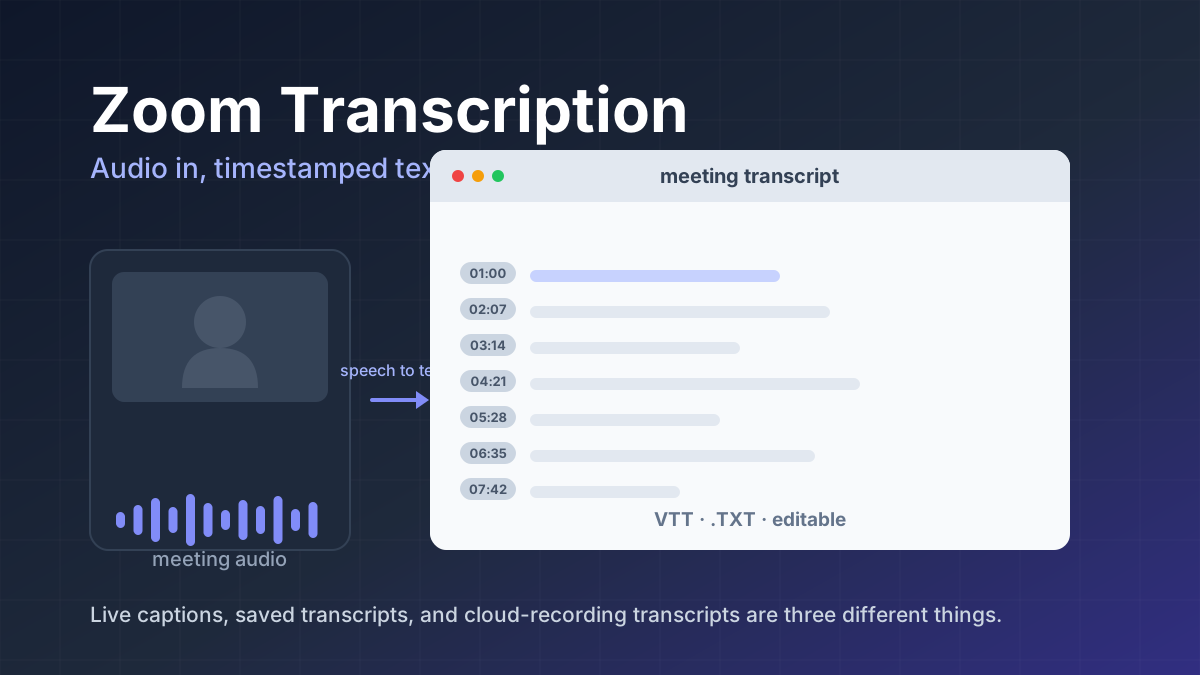
Zoom transcription turns meeting audio into text. Learn the difference between transcripts, captions, and AI summaries, how to enable them, and when to use third-party tools.
Jawad Fiaz Guides & How-To
An AI agent icon can name an agent, mark an AI feature, show live status, or point at a tool. Here is what the common symbols mean, where to find one, and what to check before you ship it.
AI Tools Vault Team