AI Browser Agents: How They Work and What They Can Do
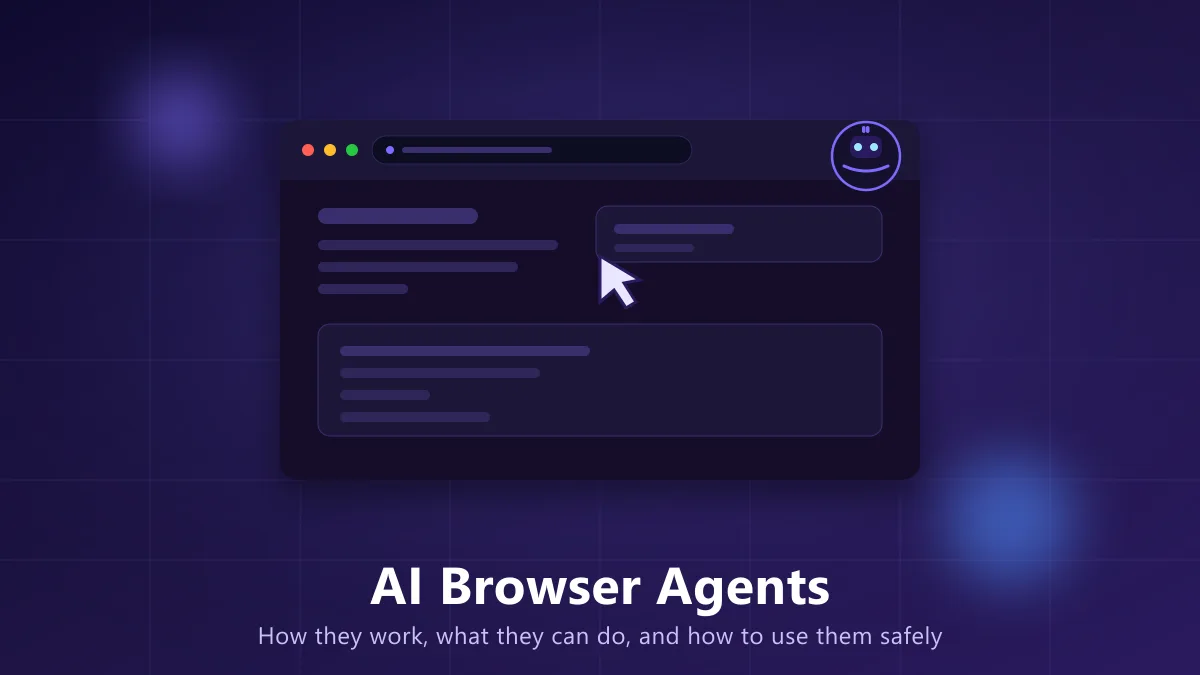
AI browser agents plan and execute multi-step tasks in a real browser — researching, filling forms, and booking. Here is how they work, what they can do, and how to stay safe in 2026.

AI browser agents plan and execute multi-step tasks in a real browser — researching, filling forms, and booking. Here is how they work, what they can do, and how to stay safe in 2026.
The first time an AI browser agent fills in a working form or handles a booking from a single sentence, it feels like someone borrowed your computer. An AI browser agent pairs a large language model with the controls of a web browser, so it can plan and execute a task step by step and deliver a result — not a suggestion. In 2026 that moved from demo to default, shipping inside mainstream products.
This plain-language tour covers what AI browser agents are, how they work, what they can do, and what to check before you hand one the keys to your accounts.
An AI browser agent is software that combines a language model with the ability to operate a web browser the way a person would: opening pages, clicking, typing into fields, filling forms, following links, and reading the results. You describe the goal in plain language — "research flights for the first week of October" — and the agent breaks it into steps and returns a finished result.
The term covers three shapes in 2026:
When University of Washington researchers studied browser security in 2026, they tested seven systems — Brave Leo AI, ChatGPT Atlas, Chrome with Gemini, Claude for Chrome, Microsoft Edge with Copilot, Firefox AI Mode, and Perplexity Comet — a snapshot of how mainstream AI browser agents had become by early 2026.
At the core, an AI browser agent runs a simple loop: observe, decide, act, observe again.
Two details matter for the security story later. First, the model does not literally click or type — it produces instructions that the application around it performs. OpenAI's computer-use tooling works this way: the model returns structured mouse and keyboard actions, and the app executes them in the browser it controls. OpenAI recommends a code-execution path where possible and stresses that sandboxed runs must preserve the on-screen session and enforce permission rules.
Second, "a browser environment" is not the same everywhere. Anthropic's documentation separates browser use — which reads a page's structure and its pixels — from computer use, which drives a whole desktop via screenshots and coordinates. Either way, every call runs in an environment the application controls. Anthropic also keeps tools like running JavaScript or uploading local files disabled by default, precisely because they widen what a manipulated page could make an agent do.
Developers get the same pattern as infrastructure. The open-source Browser Use library makes websites accessible to AI agents — driving a real browser so agents can open pages, click, type, and fill forms. Hosted platforms such as Browserbase run isolated cloud browsers, persist login state across runs in encrypted contexts, and can pull passwords from a vault instead of letting an agent type them. The Model Context Protocol is often the plumbing connecting these layers to an agent's other tools.
The capabilities have moved past toy demos. Google's description of auto browse in Chrome lists researching flights and hotels, scheduling appointments, filling forms, checking bills, and managing subscriptions. It can also pull information from a PDF into a form, find similar products in a photo, and add them to a cart within budget.
In practice, the use cases AI browser agents reliably cover condense to a few categories:
What these AI browser agents share is that the work happens in a real browser, with real side effects.
Traditional web automation — Selenium, Playwright, Puppeteer — is deterministic scripting: you write code that finds an element, clicks it, and asserts a result. It excels at testing apps you control, but it is brittle — a redesigned button or an unexpected pop-up breaks it, and you hand-write every step.
An AI browser agent replaces the hard-coded steps with judgment. Instead of "find `#submit` and click it," the agent understands the page and picks the action that moves toward the goal. That makes it far better on unfamiliar or unstructured sites and at handling exceptions without a selector to point at. The trade-off is predictability: an agent can choose a different path on the same input, and occasionally the wrong one — which is exactly why the confirmation and permission designs below matter.
The two increasingly complement each other: many agent backends rely on those same libraries for the actual clicking, while the model supplies the decision-making on top.
A chatbot is a conversation interface: text in, text out, with no side effects beyond your screen.
An AI browser agent converts words into actions. It clicks, types, submits, buys, and posts — often in a browser you use daily, with accounts and payments attached. That step from "suggests" to "does" is the product pitch and the heart of the risk conversation. As we cover in our guide to AI agent security, an agent is a model plus permissions, credentials, and tools, and the blast radius of a mistake is set by that combination. The same logic applies squarely to AI browser agents, with the extra twist that the browser is where your most sensitive sessions live.
AI browser agents are capable, but they are far from flawless — and the vendors are the ones saying so. Google's help documentation for auto browse calls the feature experimental, warns it can make mistakes — clicking the wrong link, adding the wrong quantity, or completing a purchase without permission — and states plainly that Chrome's safeguards "do not guarantee protection against all risks." Monitoring tasks, Google writes, is "the most important way to protect against risk."
That honesty sets expectations. AI browser agents are at their best for low-stakes, reversible, well-scoped work — research, forms, comparisons, housekeeping. They still need a person to review the plan, watch sensitive steps, and approve confirmations, and consequential work (payments, account changes, sensitive data) deserves extra caution instead. Practical limits apply too: Google caps auto browse at 20 requests per day on AI Pro and 200 on AI Ultra.
None of this is a reason to avoid AI browser agents — it is a reason to understand the risks, because 2026 research shows they are real and measurable.
Prompt injection is when instructions hidden in content — a web page, an email, an ad — change what a model does. For a chatbot the worst case is a strange reply. For an AI browser agent, a manipulated page can steer a real action. Google's own help page defines prompt injection the same way — malicious instructions that might be hidden from you but visible to the AI agent — with examples like moving private information from your emails to a public site. Google says it restricts activity to relevant sites and asks for confirmation, while its docs note the safeguards "do not guarantee protection against all risks."
Independent research reached a similar place. The University of Washington's 2026 study of agentic browsers and the same-origin policy found that four of the seven systems it tested enable paths that can bypass or weaken the policy — the browser's core rule that keeps one site from reading or acting on another. The researchers demonstrated a full proof of concept against ChatGPT Atlas, flagged risk conditions for three more systems, and noted that a compromised agent could read text typed into masked password fields. Their headline recommendation: use limited-permission browsers for agentic features, not your everyday logged-in browser.
The same-origin policy exists for a reason, and permissive agentic designs quietly abstract it away: a visited page becomes a gateway to other sites you are logged into. The fix is least privilege — a low-permission profile, disabled when unused, with a single task's reach.
Many useful tasks need you signed in, and how an agent handles that is a design decision. Google uses Google Password Manager for sign-in only if you opt in, and its help docs note that Password Manager "does not share your passwords with Gemini in Chrome." Good products also offer a takeover mode where you type the password and confirm the step yourself — Google's task flow hands control back for steps like finalizing a financial transaction or accepting terms of service. The general rule: never paste passwords or API keys into prompts, and disable integrations that store credentials you do not want an agent to hold.
Purchases, social posts, deletions, and one-way submissions are the actions you most want to control. Google says auto browse aims to ask for review and confirmation before actions like sending communications, modifying your data, submitting web forms, scheduling events, or touching sites with sensitive financial or health data. Prefer confirmation-first agents for anything financial or permanent, and read the confirmations rather than rubber-stamping them.
The browser is the most privileged place on your machine, and extensions inherit much of that power. Keep agent tooling minimal: open-source libraries like Browser Use are code you can audit, and hosted platforms like Browserbase isolate work in cloud browsers. Whatever you add — an extension, a script, an MCP server — keep it small and remove it when done.
Practical habits beat abstract worry, and for AI browser agents they are the difference between a useful tool and a costly mistake:
Anything touching payment, private documents, or accounts that lock you out when something goes wrong deserves the strictest settings.
Trying one of the products above — or building your own? Filter on these evidence-backed dimensions:
For a broader map of the agent landscape, our best AI agents of 2026 guide is a good next stop.
What are AI browser agents?
AI browser agents are software that pair a language model with the controls of a web browser. You describe a goal in plain language — research flights, fill in a form, compare prices — and it plans the steps, opens pages, clicks, types, and follows links until the job is done.
How do AI browser agents work?
The model sees the page through screenshots, the rendered DOM, or an accessibility snapshot, decides what to do next, and returns a structured browser action — a click, keystrokes, a scroll, or a navigation. The hosting application executes that action in a browser it controls, observes the result, and repeats the loop until the goal is complete.
What can AI browser agents do?
AI browser agents handle multi-step web work: researching and comparing across many pages, filling in forms, booking travel, managing subscriptions, checking bills, and running repetitive browser flows for developers and businesses. Because they act in a real browser, the results are real — so keep confirmations and monitoring enabled.
Are AI browser agents safe?
Used carefully, yes — good products pause for confirmation before sensitive steps, keep credential access optional, and restrict activity to relevant sites. Still, no vendor guarantees protection against all risks; Google's own docs call monitoring tasks the most important protection you have.
What is prompt injection in a browser agent?
Prompt injection is when a webpage, email, document, or other content carries instructions aimed at the AI rather than at you — often hidden to humans but visible to the agent. Because an AI browser agent acts on what it reads, an attacker can plant instructions in the content it processes to steer its actions. Not every injection succeeds, but 2026 research showed even current systems can be tricked by realistic page content.
How can AI browser agents be used securely?
Put an agent in its own low-privilege browser profile, enable optional permissions only when a task genuinely needs them, and never paste passwords or API keys into prompts. Prefer takeover for logins and payments, read every confirmation before approving it, and stick to tasks and sites you are comfortable watching.
AI browser agents are the practical endpoint of the agent boom: models that finally do things on the web instead of only talking about them. Their power comes from permission, and so does the risk. Start small, confirm sensitive actions, keep credentials out of reach, and give agents their own limited corner of your browser.
Get our best AI tool reviews and guides delivered to your inbox each week. No spam, unsubscribe anytime.

Written by
Editorial Team
The AI Tools Vault editorial team researches, tests, and reviews the best AI tools across every category.
More reading on guides & how-to
 Guides & How-To
The AI tools for job seekers actually worth using in 2026 — practical steps for tailoring resumes, practicing interviews, and tracking applications.
 AI Tools Vault Team
 Guides & How-To
An AI essay writer drafts, outlines, and revises academic text in seconds. Here's how these tools actually work, where they fall short, and how to use them without crossing academic-integrity lines.
AI Tools Vault Team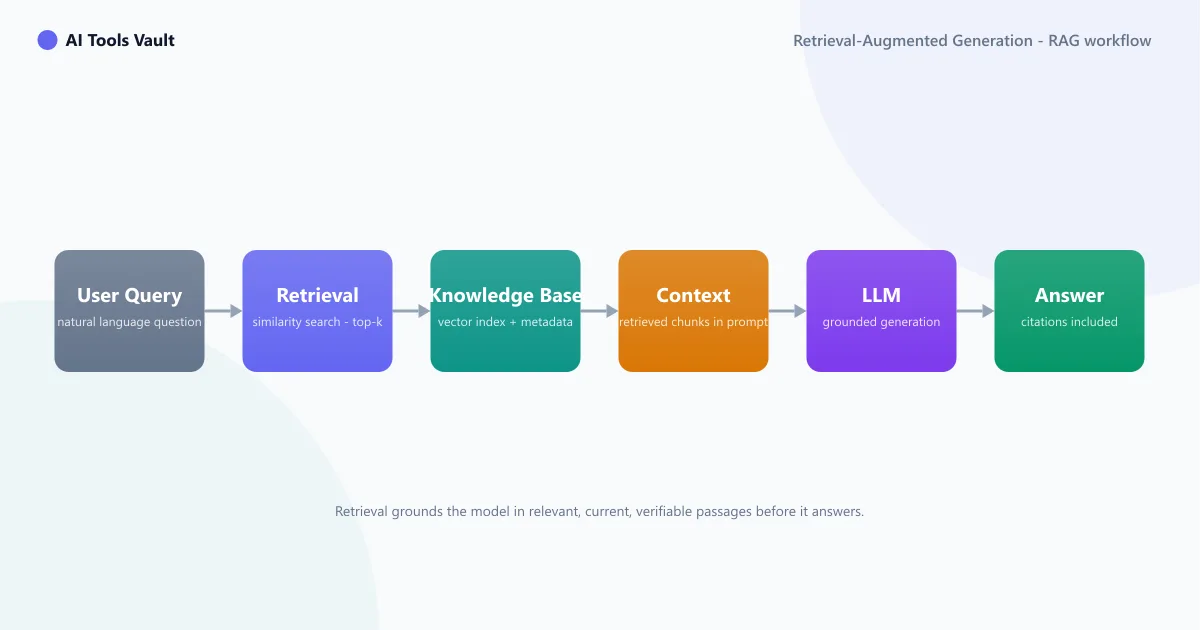 Guides & How-To
RAG explained in plain language: how retrieval-augmented generation grounds large language model answers in your own current, private data, how the pipeline works, and when it is worth building.
AI Tools Vault Team