Writing an essay can feel like fighting two battles at once: you're trying to shape a real argument while also wrestling with structure, grammar, and word choice. An AI essay writer takes over a chunk of that mechanical work, turning a bare prompt into a readable draft in seconds. That speed is genuinely useful — but it also lands in the middle of a heated debate about academic integrity.
This guide explains what these tools do under the hood, what they're genuinely good at, where they stumble, and how to use them without running afoul of your school's rules.
What Is an AI Essay Writer?
An AI essay writer is a program that uses a large language model to produce written text for academic assignments. You describe what you want — a five-paragraph argumentative essay on renewable energy, a compare-and-contrast piece on two novels, a research outline — and the tool returns a structured draft.
These tools come in two broad shapes. Some are general chatbots you can prompt into writing essays, such as ChatGPT or Claude. Others are purpose-built academic assistants that bundle essay generation with supporting features like outlining, grammar checking, citation formatting, paraphrasing, and even AI-detection scanning. MyEssayWriter.ai is an example of the dedicated approach: the vendor advertises that it drafts a cited essay in under a minute and wraps it in a wider writing suite.
What all of them share is the same underlying engine and the same basic promise: produce fluent, reasonably structured academic prose faster than a person could.
How Does an AI Essay Writer Work?
Underneath, an AI essay writer runs on a large language model trained across enormous amounts of text. When you request an essay, the model doesn't pull a finished essay from a database. Instead, it predicts text one piece at a time, guided by the prompt you supplied and the patterns it learned during training.
Most tools follow a similar pipeline. First they interpret your brief — topic, word count, academic level, essay type. Then they plan a rough structure: an introduction, supporting points, and a conclusion. Finally they generate prose to fill that structure, sometimes weaving in citations or using an outline-first mode that checks your approval before writing full paragraphs.
This prediction-based nature explains both the power and the weakness. The model can rearrange ideas and produce clean sentences quickly, but it has no underlying understanding of truth. It assembles text that looks correct, which is why the next section matters.
What Can an AI Essay Writer Help With?
Used as an assistant rather than a substitute, it covers the repetitive side of writing well:
- Overcoming a blank page. A quick generated outline or opening paragraph gives you somewhere to start.
- Structuring an argument. Asking for a compare-and-contrast or cause-and-effect framework helps you see how to arrange your points.
- Rewording your own sentences. Stuck on an awkward sentence you wrote? A paraphraser can offer alternatives.
- Summarizing long sources. Feed in a dense article and get a summary to help you decide whether to read it fully.
- Polishing transitions. Weak links between paragraphs are a common editing task these tools handle competently.
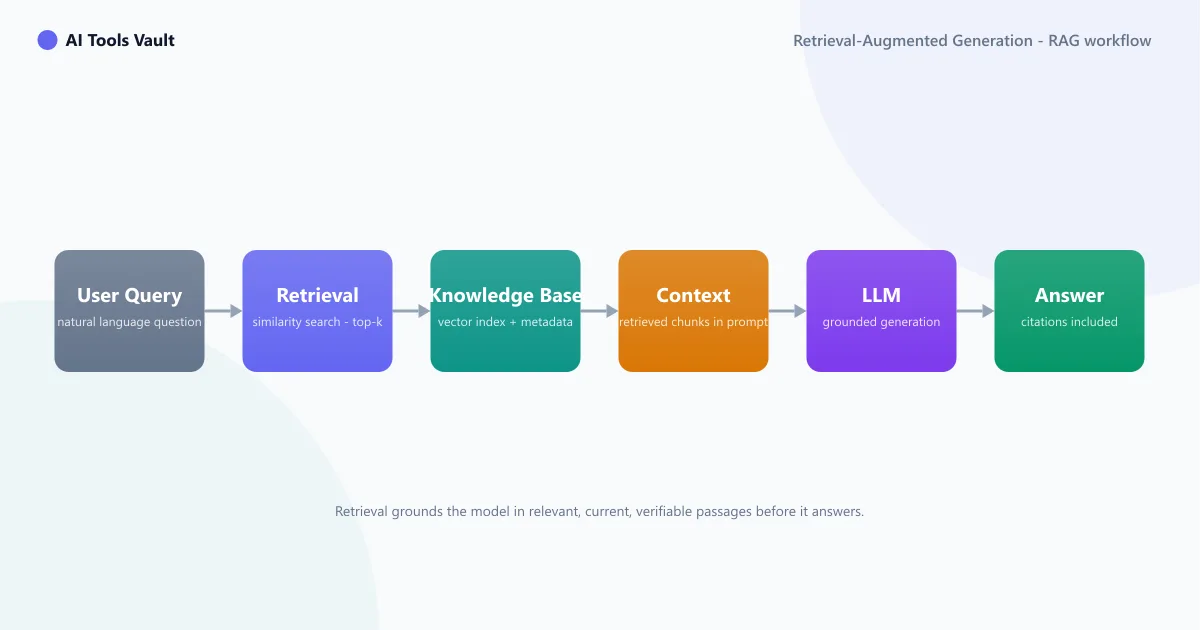
A handful of academic tools go further and search real scholarly sources, attaching citations in styles like APA or MLA. That can be a real research aid, but it does not remove the need to verify every reference yourself.
Key Features to Look For
If you're comparing these tools, a few features separate the useful ones from the frustrating ones.
Citation and source handling is the big one. Generic chatbots frequently invent references that don't exist. Tools that search actual publications and flag sources for you to verify are meaningfully safer for academic work.
Control over output. Can you set the academic level, essay type, length, and citation style? More control means output closer to what your assignment actually requires.
Editing and rephrasing. A tool is more valuable if it helps you revise your own draft, not just generate a fresh one. Paraphrasing and grammar features keep you in the driver's seat.
Export and integration. Downloading to Word, PDF, or Google Docs matters more than it sounds — it determines whether you can actually use the output in your workflow.
Transparent limits. Look for honest documentation about how sources are verified and how the tool is meant to be used. That tells you a lot about whether the company treats users responsibly.
Benefits of Using an AI Essay Writer
The obvious benefit is speed. What might take an evening — writing a structured first draft — shrinks to minutes. That frees mental energy for the parts of an essay that actually reward thinking: refining your thesis, strengthening evidence, and making the argument sharper.
There's also a genuine learning angle. For students still figuring out essay structure, asking an AI to show how an argumentative essay is organized — then writing your own version — can clarify what's expected. Used this way, the tool becomes a scaffold rather than a shortcut. Many students combine it with other productivity software in their workflow.
Finally, for writers who struggle with mechanics, an essay writing AI can reduce the friction of getting ideas onto the page, lowering the barrier to starting at all.
Limitations and Things to Watch For
The limits are real, and they're the same ones that apply to any large language model.
Factual errors. The model can state false information confidently. Names, dates, figures, and scientific facts all deserve a double-check.
Fabricated sources. Some tools invent citations that look plausible but don't exist. Even tools that search real sources can attach one that doesn't support the sentence it's cited for. Verify in a library database or Google Scholar.
Generic voice. Output tends toward bland, conventional academic prose. It often won't match your instructor's preferences, your course's specific framing, or a personal angle you need.
Missing nuance. A model does not know your class discussions, your professor's expectations, or the specific source you were told to use. It writes to a general template.
Institutional scrutiny. Universities increasingly use AI-detection tools and have explicit AI-use policies. Detectors are imperfect — they can flag human writing and miss AI text — but submitting heavy AI output risks an integrity investigation regardless of what any tool claims.
AI Essay Writers and Academic Integrity
This is where the conversation gets serious. A growing number of universities publish formal guidance on generative AI, distinguishing between allowed assistance and prohibited submission. Microsoft and major institutions have both published frameworks describing when AI use crosses from supported to inappropriate.
The general principle most schools land on: using AI to assist your thinking and drafting can be acceptable with disclosure, while presenting AI-generated text as entirely your own work is usually a violation. Plagiarism is traditionally about passing off someone else's words as your own; submitting AI output can raise a similar concern about originality and authorship, which is why AI detectors have become part of many integrity workflows.
The practical takeaway is straightforward. Read your institution's AI policy before using any tool. If it's unclear, ask your instructor. And be transparent about how you used the tool when you hand work in — transparency is far safer than trying to pass generated text off through some humanizer claiming evasion, which no tool can honestly guarantee.
How to Use an AI Essay Writer Effectively
Treat the AI as a copilot, not the author. A responsible workflow looks something like this:
- Start with your own thinking. Sketch your position or thesis before opening any tool.
- Use AI for structure. Ask for an outline or a way to arrange your points, then adapt it to your argument.
- Draft in chunks you actually own. Generate a section, then rewrite it heavily in your own voice rather than pasting and submitting.
- Verify everything. Check every fact and every citation against real sources.
- Run your own integrity checks. Use a plagiarism checker on your final draft and be honest with yourself about how much is genuinely yours.
- Disclose. Follow your institution's rules about crediting AI assistance.
The goal is to spend your effort on the thinking that matters and let the tool handle the busywork — not the other way around.
AI Essay Writer vs. Traditional Essay Writing
Traditional writing has advantages no tool can replace. You bring your own analysis, your course context, and a voice shaped by your experience. You also build the critical skill that the whole assignment is meant to test — organizing and defending an argument.
What the AI offers is mainly efficiency. It removes the grinding parts: drafting fast, rephrasing, structuring. The best outcomes usually combine both: you do the thinking, the AI accelerates the writing and editing.
This is why many thoughtful educators argue the real question isn't "AI or no AI" but "Where should a human's contribution stay above the line?" Learning where that line sits — for you and for your school — is part of using these tools well.
Who Can Benefit From an AI Essay Writer?
Students from high school through doctoral programs use them to draft, outline, and understand essay structure. Non-native English speakers find paraphrasing and grammar support especially valuable for producing clearer academic prose. Researchers and educators use them to summarize sources, draft literature-review sections, or plan course materials. And freelance writers and professionals lean on them for structured reports and long-form drafting when speed matters.
The tools aren't just for one audience — anyone whose writing is structured and argumentative can benefit, provided they treat output as raw material.
Common Mistakes to Avoid
Several habits reliably derail people using these tools:
- Submitting first-pass output. The model's first draft is rarely meeting your exact brief.
- Trusting generated citations. This is one of the most common and most damaging errors.
- Using AI to replace the assignment's learning. If you're meant to demonstrate a skill, handing the whole thing to a machine defeats the purpose.
- Ignoring your institution's policy. Getting an integrity finding over a tool is a costly, avoidable mistake.
- Chasing "undetectability." Relying on a humanizer to hide AI use from detectors is both ethically dubious and technically unreliable — detectors evolve, and nothing guarantees evasion.
Final Thoughts
An AI essay writer is a genuinely useful tool when treated as an accelerator rather than an author. It can save hours, clarify structure, and help you get past the blank page. The discipline is in the boundary: verify every fact, rewrite in your own voice, and stay honest about how you used it.
Keep that boundary clear and the tool quietly makes you a stronger, faster writer. Cross it and you risk your academic standing over what was, at best, a minor time saving.
Curious what else is out there? The AI Tools Vault directory catalogues a wide range of AI software worth exploring. You might also dig into our guide to the best AI tools for students or our rundown of AI writing, voice, and productivity tools.
Sources / References