
Manus AI Review
AI AgentsFreemiumAn autonomous AI agent that plans and executes complex tasks end to end — research, data analysis, and multi-step workflows — and delivers finished files.
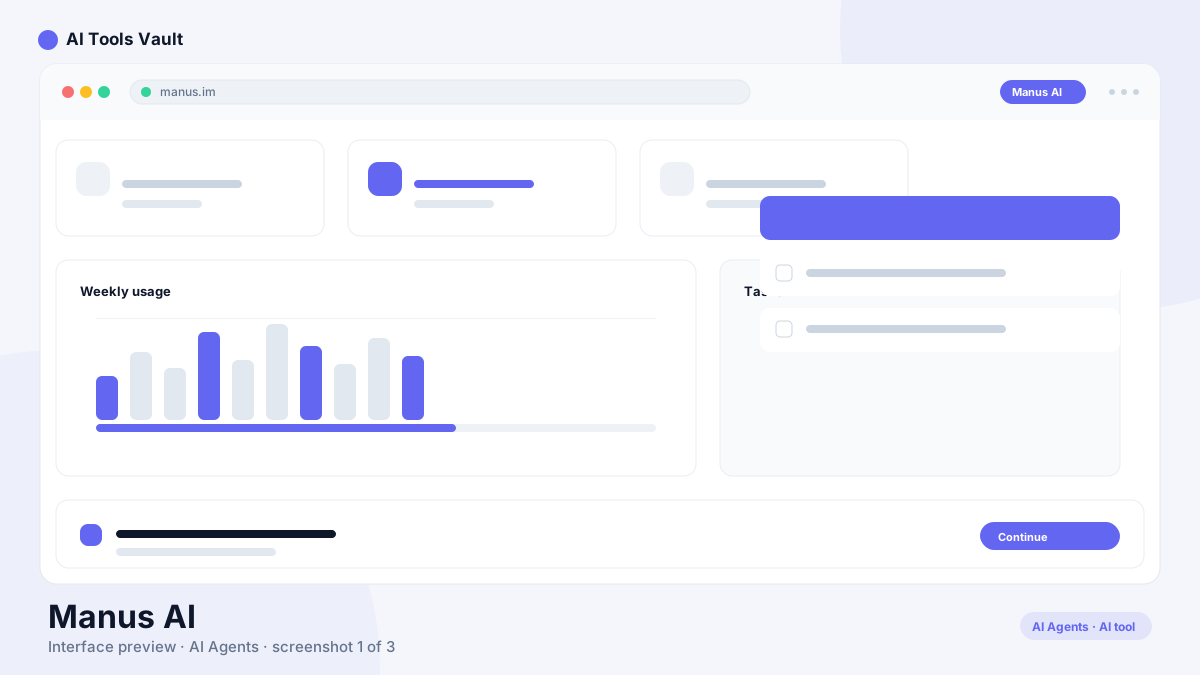
Overview
It is an autonomous general-purpose agent. You give it a task — research a market, build a dataset, draft a report, clean up a spreadsheet — and it breaks the work into steps, uses the tools it needs, and returns finished output instead of a chat answer. It launched in 2025 and quickly built a reputation as one of the most capable 'just do the whole job' agents available.
Unlike a chatbot that answers, Manus acts. It browses the web, writes and runs code, manipulates files, and assembles deliverables you can actually use. That makes it a practical tool for research-heavy and data-heavy workflows where the real value is in the finished artifact, not the explanation.
Autonomous Planning & Execution
Manus starts every task by turning your request into a step-by-step plan, then works through it using its available tools. It can chain dozens of actions together — searching, reading, computing, writing — and keeps going until the task is complete.
- Turns requests into structured plans
- Executes multi-step workflows automatically
- Uses browsing, coding, and file tools
- Adapts its plan as it encounters new information
Research & Data Analysis
The sweet spot for Manus is knowledge work: market research, competitor analysis, data cleanup, and report building. It can pull information from the web, organize it into tables, and hand back a finished deliverable — a spreadsheet, a summary deck, or a written brief — rather than a pile of links.
- Deep web research with sources
- Data extraction and cleaning
- Generates tables, spreadsheets, and reports
- Assembles finished deliverables
Manus AI vs Devin AI vs Genspark
These three are all agentic, but they target different jobs. Devin AI is purpose-built for software engineering — it owns a dev environment and ships code. Genspark is strongest at AI search and research agents. This one is the most general of the three, covering research, data, and workflow automation in one place.
- Devin AI: autonomous software engineering
- Genspark: AI search and research agents
- General-purpose task completion
- Pick by whether your work is code, search, or everything
Manus AI Pricing — Plans & Free Tier
Free limited credits; Starter $39/mo; Pro $199/mo (annual billing available)
Free
Try Manus with limited agent credits.
- Limited task credits
- Standard agent runs
- Core capabilities
- Community support
Starter
For individuals running regular agent tasks.
- 1,000 task credits/mo
- Faster agent runs
- Parallel sessions
- Priority queue
Pro
For power users and small teams.
- 6,000+ task credits/mo
- Priority computing
- Multi-user sharing
- Advanced agent tools
Best For
Recommended use cases and scenarios where Manus AI shines.
Pros and Cons
It is one of the most impressive general-purpose agents available, delivering real finished work instead of chat answers — but it's a young product with credit-based pricing and occasional tasks that need a human checkpoint.
Pros
- Plans and executes tasks autonomously
- Delivers finished files, not just text
- Handles long multi-step workflows
- Strong at research and data analysis
Cons
- Agent runs can take a while
- Best results on paid plans
- Occasionally needs human checkpoints
Frequently Asked Questions
Common questions about Manus AI, answered.
What is Manus AI?
It is an autonomous general-purpose AI agent that plans and executes complex tasks — research, data analysis, and multi-step workflows — and returns finished deliverables instead of just chat responses.
Is Manus AI free to use?
It has a free tier with limited task credits. Paid plans start at $39/month for Starter (1,000 credits) and $199/month for Pro with expanded credits and priority compute.
What is Manus AI used for?
It is used for research, market analysis, data preparation, report building, and general multi-step tasks that would otherwise require clicking through dozens of steps manually.
How does Manus AI compare to Devin AI?
Devin AI is specialized for autonomous software engineering, while Manus AI is a general-purpose agent covering research, data, and workflow tasks. If you need code shipped, Devin is the pick; for broader knowledge work, Manus is more general.
What are the best Manus AI alternatives?
Genspark is a strong alternative for AI search and research agents, Claude Code for autonomous coding, Perplexity AI and You.com for answer-focused research, and NotebookLM for source-grounded research notebooks.
Reviews & Ratings
Loading reviews...
Similar Tools
More AI Agents tools you might like

NotebookLM
Google's AI research notebook that summarizes your sources, answers questions with citations, and turns documents into podcasts and study guides.

ChatGPT Agent
ChatGPT Agent lets ChatGPT plan and run multi-step tasks by itself, using apps, files, and cloud browser tools while you stay in the loop.

Guides & Articles about Manus AI
Read our detailed reviews and comparisons covering Manus AI
 Guides & How-To
AI Browser Agents: How They Work and What They Can Do
AI browser agents plan and execute multi-step tasks in a real browser — researching, filling forms, and booking. Here is how they work, what they can do, and how to stay safe in 2026.
 AI Tools Vault Team
 Comparisons
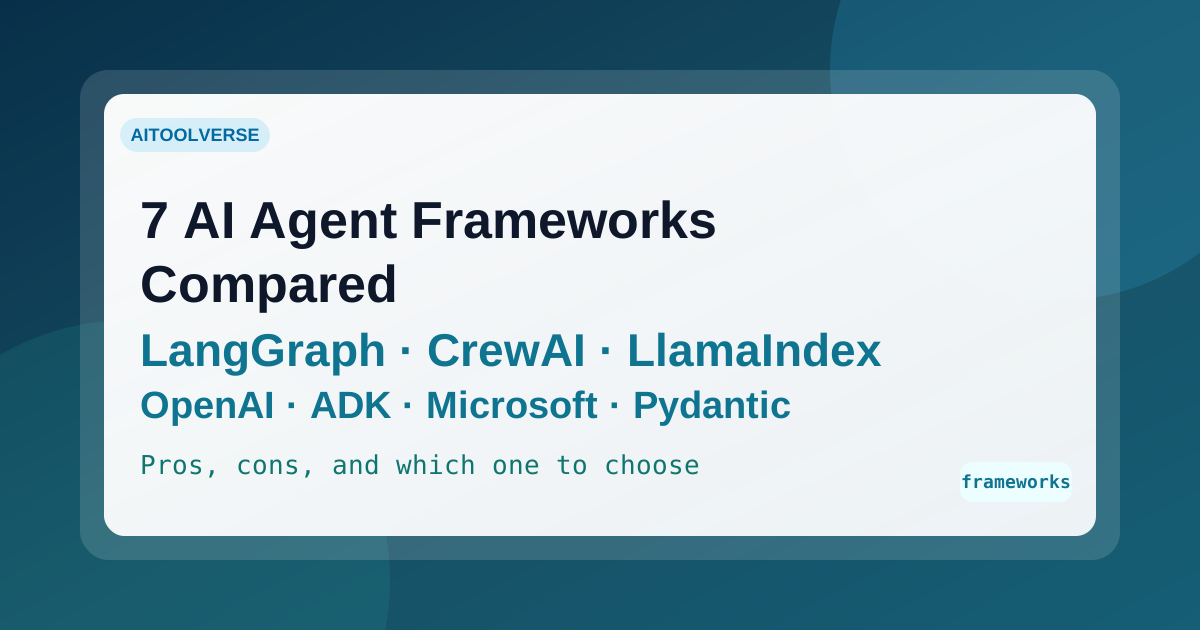
7 AI Agent Frameworks Compared for 2026
Seven AI agent frameworks compared for 2026 — LangGraph, CrewAI, LlamaIndex, OpenAI Agents SDK, Google ADK, Microsoft Agent Framework, and PydanticAI — with current status, real trade-offs, and how to choose.
AI Tools Vault Team Guides & How-To
10 Best Free AI Agents Like AutoGPT for 2026
The best free AI agents like AutoGPT for 2026 — autonomous agents that plan, browse, code, and ship tasks without expensive subscriptions, plus which is right for you.
AI Tools Vault Team